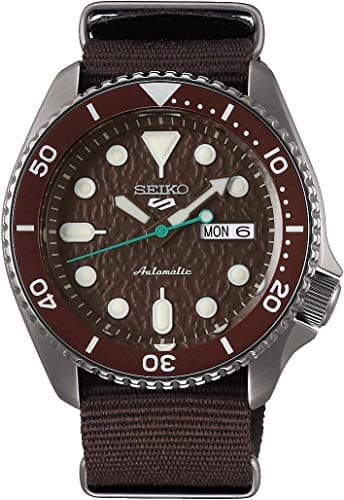
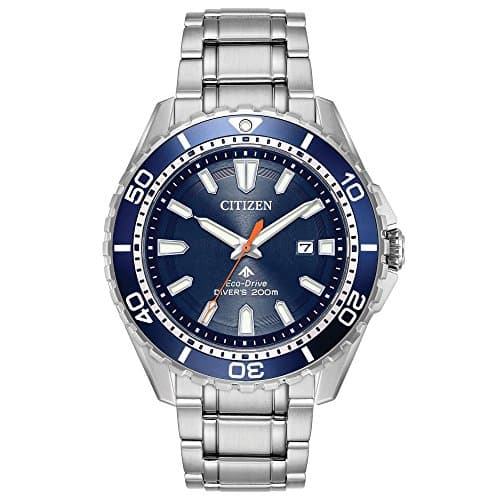
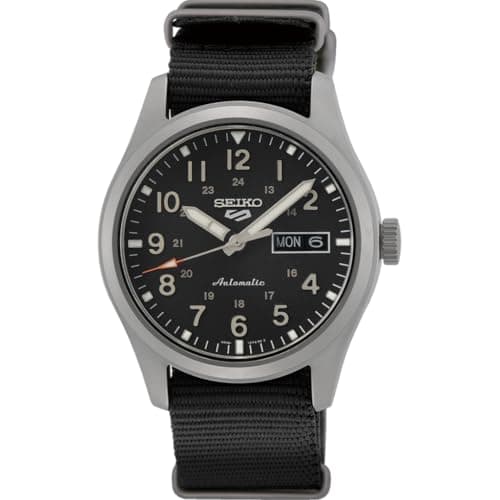
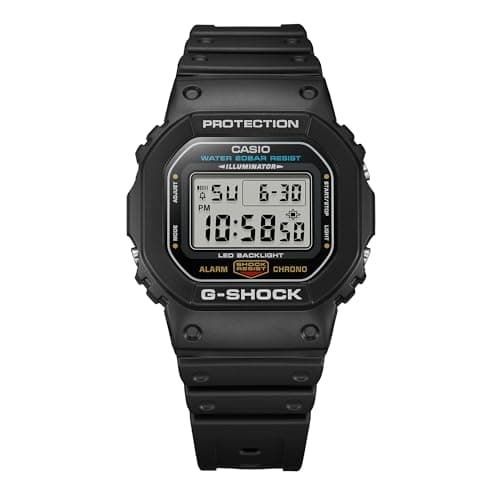
Four Japanese houses matter at the prices this site covers, and between them they own the value end of the watch world: Seiko, Citizen, Orient (owned by Seiko Epson) and Casio. What they share is an engineering culture that spends money on specification rather than finishing — an in-house movement, a real water-resistance rating, a case that survives — and prices the result at a level Swiss brands cannot match. This page ranks the best of them against each other rather than one brand at a time.
The individual brand roundups already exist: Seiko, Citizen, Orient and Casio. What none of them can tell you is which house to buy from in the first place, which is the question people actually type. So the ranking here is cross-brand and the criteria are the same ones we use everywhere: published water resistance, movement and who made it, crystal, then fit and lug width.
A note on scope. Every watch below has a verified live Amazon listing and a published spec sheet, and nothing on this page costs more than four hundred dollars. Grand Seiko, Credor and the upper Citizen Campanola range are Japanese and excellent and entirely absent — they are not in our registry, and we do not rank watches we cannot point you at.
What each house is actually good at
Seiko makes its own movements, its own luminous compound and even its own crystal (Hardlex), and the Seiko 5 Sports line is the default answer to "my first automatic" for good reason — the 4R36 hacks, hand-winds and is serviceable anywhere. The compromise is the crystal: Hardlex is a hardened mineral, not sapphire.
Citizen owns light-powered watches. Eco-Drive is not a battery-saving trick but a different proposition: a cell charged by any light source, no winding, and — the part people miss — a case that never has to be opened. Citizen is also the house most willing to publish an ISO 6425 dive specification at an affordable price, which is why two Promasters appear across this site's dive pages.
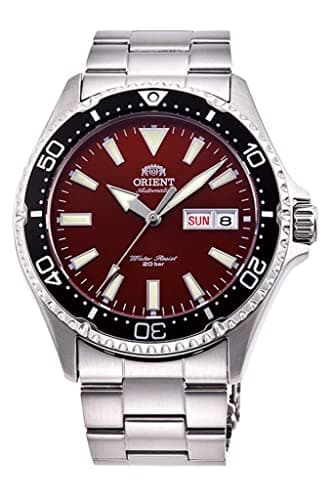
Orient is the specification bargain. The F6922 is an in-house automatic that hacks and hand-winds, and the Kamasu puts a sapphire crystal and 200m on top of it for less than a Seiko 5 — the single best price-to-spec jump in the Japanese catalogue.
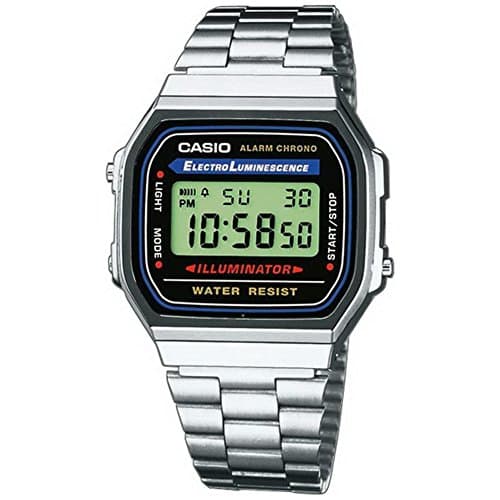
Casio is the durability and price house. A DW-5600 is rated to 200m in a resin case that outlives steel ones, and the A168 costs less than a good strap. Neither is trying to be jewellery, and that is the point.
Automatic, solar, or digital
This is the real decision, and it cuts across all four brands. An automatic — the Kamasu, the Seiko 5s — runs on your wrist, keeps time to a few seconds a day and will need service eventually. A light-powered quartz — the Citizen Promaster — keeps time to a few seconds a month, never needs winding and never needs the case opened. A digital Casio does everything worse romantically and better practically. Our quartz vs automatic and solar vs automatic pages argue it with the published accuracy and servicing figures.
Where the Japanese houses lose
Two places, and both are honest. The first is crystal at the bottom of the range: Seiko fits Hardlex and Casio fits mineral or resin where a European brand at the same price might fit sapphire, and the Orient Kamasu's sapphire is the exception that proves the rule — see our sapphire crystal roundup. The second is finishing: brushing and polishing at the $200-400 level is good rather than beautiful, and the dials are printed rather than applied in places a Swiss competitor would not accept. You are buying specification, not jewellery.
Fit and straps across this group
The lug widths here are friendly: 22mm on the Kamasu, the SRPD85 and the Promaster BN0191, 20mm on the Seiko 5 Sports Field. Both the Casios have fixed or integrated bands and take no standard strap at all, which is worth knowing before you buy one expecting to change it. Case sizes run from 38.6mm to 45mm, and only some of the six publish a lug-to-lug — the column reads "—" for the rest, because we are not going to guess the number that decides fit.