The Rolex Explorer is the watch people hold up as the ideal one-watch collection: a plain steel sports watch, black dial, no bezel to speak of, small enough to live under a shirt cuff and rated for water. It is also a watch most people are not going to buy, which is why "Rolex Explorer alternatives" is a search. This page starts where that kind of page should start — with what Rolex actually publishes, rather than with what the watch means to anybody.
Rolex's own specification for reference 124270, the 36mm Explorer: an Oyster case in Oystersteel, 36mm in diameter, with a monobloc middle case, a screw-down case back and a screw-down winding crown using Rolex's Twinlock double waterproofness system. A smooth bezel. A scratch-resistant sapphire crystal. Waterproof to 100 meters / 330 feet. The self-winding calibre 3230, with a power reserve of approximately 70 hours, carried in a case certified as a Superlative Chronometer at −2/+2 seconds a day after casing. A black dial with Rolex's Chromalight display. An Oyster bracelet of three-piece solid links with an Oysterlock folding safety clasp and a 5mm Easylink extension.
Read that list and the useful thing becomes obvious: it splits cleanly in two. The matchable half is a 36 to 40mm steel case, a screwed crown, 100m, sapphire and a self-winding movement with a long reserve. Several watches in the low hundreds publish exactly those things, and one of them publishes a longer power reserve than the Rolex. The unmatchable half is the chronometer certification, the Parachrom hairspring and Paraflex shock absorbers, the case and bracelet finishing, the Oysterlock clasp, and the resale value. Nothing on this page comes near any of that, and if one of them is your reason for wanting an Explorer, no alternatives page will help you.
So the ranking below weights the matchable half, in this order: published water resistance and the crown that makes it real, then crystal, then movement and power reserve, then fit — because a 36mm watch is a specific size and most "alternatives" lists quietly hand you a 42mm one. A bracelet counts for something too, since the Explorer is a bracelet watch. Every number in the spec table is a published manufacturer specification; where a maker publishes none, the cell reads "—" rather than a guess.
The criterion that knocks most candidates out: 100m
The Explorer publishes 100 meters. That sounds modest next to a dive watch, but it is the rating that quietly disqualifies a lot of the watches people suggest for this role — plenty of handsome 36 to 39mm steel watches publish 30m or 50m, which our water-resistance explainer describes as splash-and-handwash territory. All five picks on this page publish 100m. That is not an accident; it is the first filter we applied.
Where they differ from the Explorer is the crown. Rolex publishes a screw-down Twinlock crown and a screw-down case back, and that mechanism is why a 100m rating on an Explorer is a conservative number rather than an optimistic one. None of the five picks here publishes a Twinlock equivalent. Our crown comparison explains what the difference actually costs you in practice: a push-pull crown left slightly proud is the single most common way a water-resistant watch gets wet inside. Treat the 100m on these five as a rating that assumes the crown is pushed home.
Sapphire: three of five, and the Explorer has it
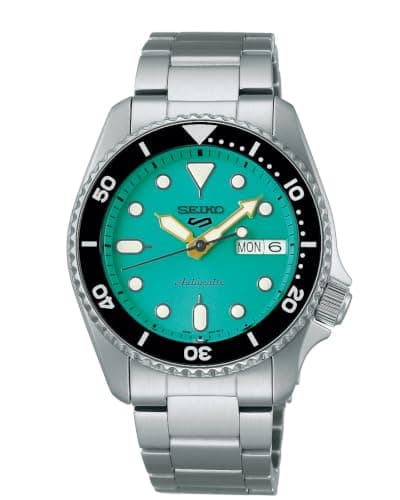
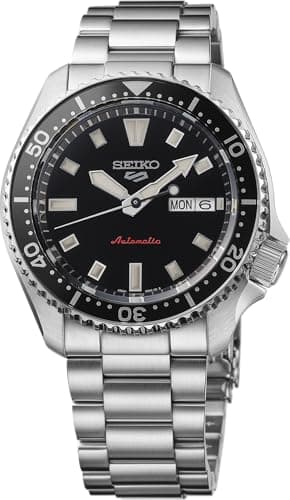
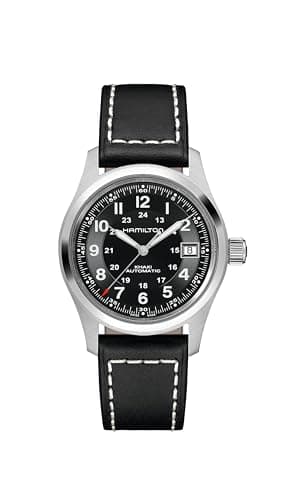
Rolex publishes a scratch-resistant sapphire crystal. On this page the Hamilton, the Tissot and the Timex do too. The two Seiko 5s use Hardlex, Seiko's own hardened mineral glass, and that is the main reason they rank third and fifth rather than higher. Our sapphire against mineral piece sets out the real trade — sapphire resists scratches far better and chips more readily — but for a one-watch steel sports watch that will be worn daily for years, sapphire is the right side of it.
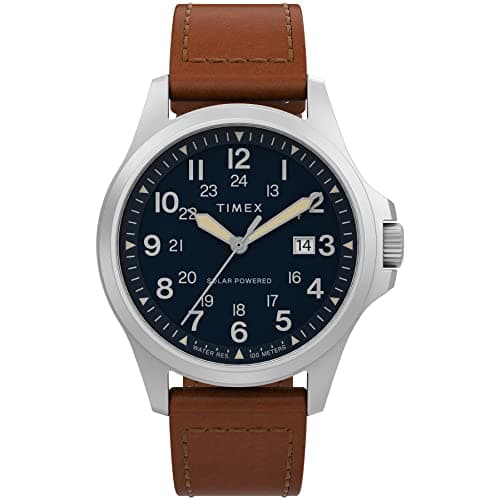
It is worth sitting with how cheap sapphire has become, because it reframes this whole category. The Timex Expedition North publishes a sapphire crystal, solar power and 100m for roughly a fifth of the Hamilton's price. Twenty years ago that combination did not exist below four figures. It is the strongest argument on this page that an Explorer alternative is a genuinely good watch rather than a consolation prize.
The movement: one pick beats the Explorer on its own published number
Rolex publishes approximately 70 hours of power reserve for the calibre 3230. Hamilton publishes 80 hours for the H-10 automatic in the Khaki Field Automatic. That is not a rhetorical trick — it is the manufacturer's own figure against the manufacturer's own figure, and on that one specification the three-figure watch wins. The two Seiko 5s use the 4R36, which hacks and hand-winds and carries a published reserve of about 41 hours; it is a workhorse rather than a long-reserve movement.
What Rolex publishes that Hamilton does not is the certification: Superlative Chronometer, −2/+2 seconds a day, tested after the movement is cased. Hamilton publishes no equivalent accuracy figure for the H-10, and neither does Seiko for the 4R36 in these references, so we print none. This is the single clearest illustration of what the money buys at the top of the market: not a longer reserve, but a tested, guaranteed accuracy figure. Our guide to the best automatics covers how to read movement specifications across the range.
Two picks are not mechanical at all. The Tissot PRX here is the Swiss quartz version, and the Timex is solar quartz. Both are on the page deliberately: if your reason for wanting an Explorer is "one steel watch that does everything and asks nothing of me," a quartz movement serves that brief better than a mechanical one, and our quartz against automatic comparison makes the case honestly. If the winding rotor is the point, buy the Hamilton or a Seiko 5.
Fit: the Explorer is 36mm, and that is the hardest part to match
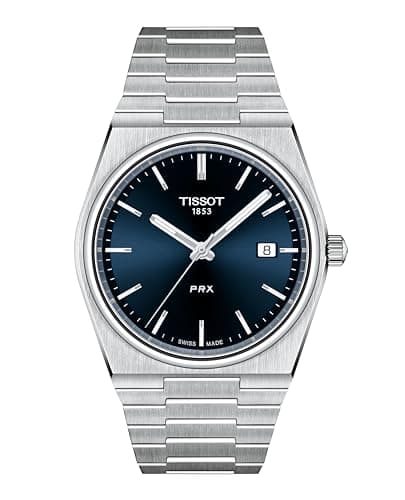
This is where most Explorer-alternative lists fall down, and it is the part this site cares about most. Rolex publishes a 36mm diameter. Published figures for the picks here: the Hamilton Khaki Field Automatic is 38mm with a 46.5mm lug-to-lug; the Seiko 5 Sports SRPK33 is 38mm with a 44.2mm lug-to-lug — the shortest span on the page; the Tissot PRX is 40mm; the Timex Expedition North is 41mm; the Seiko 5 Sports SRPE steel is 42.5mm with a notably short 44.6mm lug-to-lug.
Practical reading. If 36mm was the appeal, the SRPK33 is the closest thing here and the Hamilton is next — same diameter, but 2.3mm more lug-to-lug, which you will notice. The PRX at 40mm wears shorter than the number suggests because the bracelet is integrated into the case, so there are no lugs to overhang. The SRPE is a 42.5mm watch and should not be on your list if you came here looking for a small one. Our watch size for your wrist guide explains why lug-to-lug beats diameter every time, and field watch sizing covers the same ground for this category specifically.
The bracelet problem, and the strap consolation
The Explorer comes on an Oyster bracelet with a folding Oysterlock safety clasp and a 5mm Easylink comfort extension, all published by Rolex. That is a genuinely excellent bracelet and it is a real part of what you are not getting here. Only two picks on this page are bracelet watches: the Tissot PRX, whose integrated bracelet is the whole design, and the Seiko 5 Sports SRPE steel.
The compensation is strap flexibility, and it is worth more than it sounds. The Hamilton, the SRPK33 and the Timex all take 20mm straps; the SRPE steel takes 22mm. That means a steel bracelet from our bracelet roundup or a leather strap from our leather roundup turns any of them into a different watch for the price of a restaurant meal. The PRX is the exception and the exception matters: it has no standard lug width at all, so nothing aftermarket fits it. On a site built around lug width, that is worth saying plainly, and it is why the PRX ranks second rather than first.
What none of these match, stated once and properly
Three things, and they are not small. First, the certification: Rolex publishes −2/+2 seconds a day, verified after casing, on every Explorer. Nothing here publishes a tested accuracy figure at all. Second, the case and bracelet execution — the monobloc middle case, the Oystersteel, the solid-link bracelet with its safety clasp. You can see the difference across a counter, and anyone who tells you a three-hundred-dollar watch is finished like a Rolex has not handled both. Third, resale. An Explorer holds value in a way that nothing on this page does or claims to.
If any one of those three is your reason, buy the Explorer or save for it, and treat the watches here as something to wear in the meantime rather than instead. What this page can honestly tell you is that the functional brief — a 36 to 40mm steel sports watch, 100m, sapphire, a self-winding movement with a long reserve, legible in the dark — is available for a small fraction of the price, and the Hamilton gets there on every line but one.
What is not on this page, and why
No Tudor Black Bay 36, no Oris Big Crown Pointer Date, no Nomos Club, no Sinn 556, no Seiko Alpinist. Several of those are the obvious enthusiast answers to this question. None has a verified live listing in our registry, and we rank only watches we can price for you from the live feed rather than padding the list with names. The Hamilton Khaki Field Murph is also absent despite fitting the brief closely — it is a 38mm Swiss automatic with sapphire and 100m, and it is ranked on our Hamilton roundup instead, because putting two near-identical Hamiltons on a five-pick page would have been padding of a different kind.
Worth knowing if you are comparing pages: this is the second alternatives page in this hub. Hamilton Khaki Field alternatives runs the same exercise one shelf down, for people who want the Hamilton this page ranks first and cannot stretch to it. The two pages share one pick.
The dress-steel version of this question
The Explorer is a tool watch, and the picks above are chosen for that. If the Rolex you actually have in mind is the one on a Jubilee bracelet with a date, Rolex Datejust alternatives is the page: it quotes Rolex's published specification for reference 126200 — calibre 3235, approximately 70 hours, −2/+2 seconds a day after casing, a Cyclops over the date — and finds one alternative that beats it on power reserve.