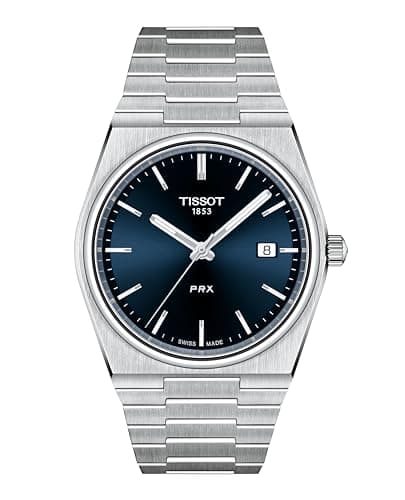
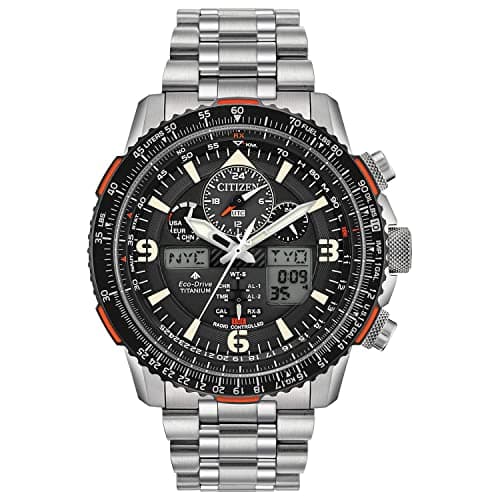
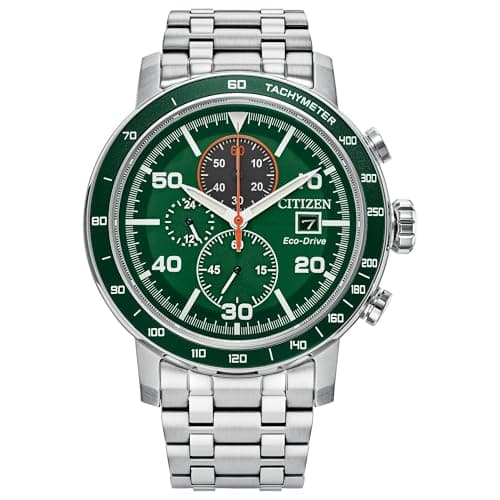
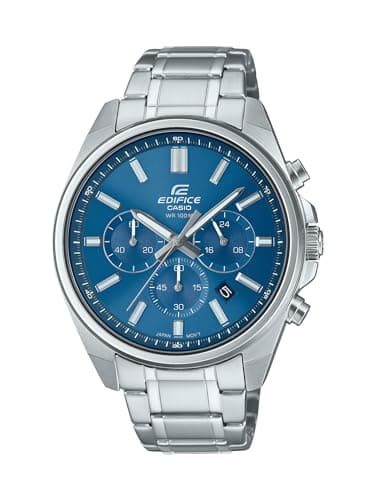
This site had a quartz dive roundup and a quartz field roundup and nothing answering the question those two are children of: which quartz watch should I buy? This page is that parent. It deliberately spans the whole range — roughly twentyfold from the cheapest pick to the dearest — because the honest answer to "best quartz watch" depends entirely on which of quartz's four advantages you actually want.
Those advantages, which are also the criteria this page ranks on. Accuracy: a standard quartz movement is specified in seconds per month where a mechanical movement is specified in seconds per day, and a radio-set quartz watch is effectively never wrong at all. A case that stays sealed: a light-powered quartz watch never needs its back removed, which is the real-world reason its water-resistance rating holds up better over a decade than a battery watch's does. Thinness: there is no mainspring barrel or automatic winding rotor, so a quartz watch can be slimmer than a mechanical one of the same diameter. Price: quartz is where the specification money goes furthest, which is why this page can offer sapphire in the mid-hundreds and a 200-meter rating for under a hundred dollars.
What quartz does not give you is the thing people buy mechanical watches for, and we are not going to be coy about it: a sweeping seconds hand, a movement someone assembled, and a watch that will still run in fifty years with a service rather than a module swap. If that is what you are shopping for, the page you want is the best automatic watches, and quartz against automatic sets out the trade properly. Nobody needs to win that argument for you.
One definition note before the picks, because it decides what is on this page. Solar and Eco-Drive watches are quartz watches — the oscillator is the same, the difference is where the power comes from. Three of the seven picks here are light-powered, which is why this page overlaps the solar roundup on two picks and watches without batteries on none, since that page is about the mechanical and solar answers rather than the quartz ones.
1. Accuracy: the number nobody prints
Here is the uncomfortable fact about accuracy claims. Most of these makers do not publish a seconds-per-month figure for these specific references, so we do not print one — every spec table on this site shows "—" rather than a number we invented. What is published and verifiable is the mechanism: the Citizen Skyhawk A-T is radio-controlled, so it corrects itself against an atomic time signal and its accuracy is a function of reception rather than of the oscillator. That is the only accuracy claim on this page we can stand behind, and it is the strongest one available at any price.
For the rest, the useful generalisation is the one that holds across the whole category: a quartz watch is specified in seconds per month, a mechanical watch in seconds per day, and nothing here will annoy you. If precision is genuinely the reason you are buying, buy the radio-set watch.
2. The sealed case, and why it matters more than the rating
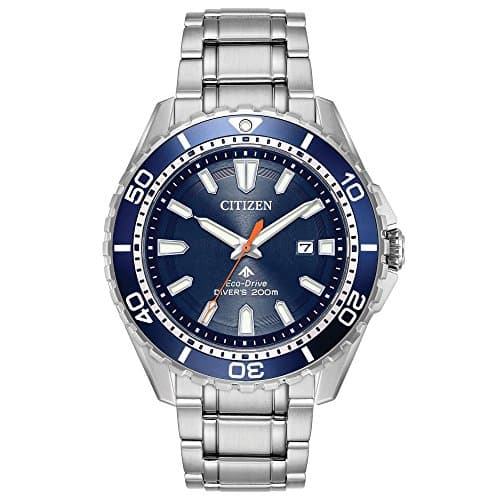
Three picks here are light-powered: the Promaster Dive Eco-Drive, the Skyhawk A-T and the Brycen chronograph. None of them needs its caseback removed in normal ownership, which matters because every battery change is an opportunity for a gasket to be reseated badly. That is a quiet, real advantage and it is why our top pick is a solar diver rather than the more impressive-looking Swiss quartz below it. The Promaster is also the only pick on this page with an ISO 6425 compliant rating, which covers the bezel, the crown, legibility in darkness and salt water rather than pressure alone — see what makes a watch a dive watch.
3. Crystal: three sapphires, and where they sit
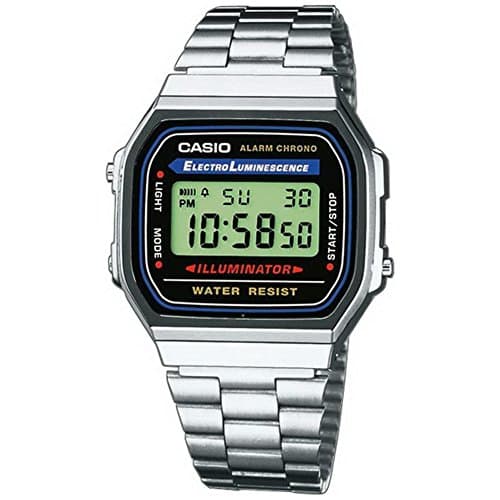
The Tissot PRX, the Citizen Brycen and the Citizen Skyhawk all publish sapphire. The two Casio analogs and the G-Shock publish mineral glass, and the A168 publishes a resin glass, which is the honest word for plastic. That ladder is the single clearest illustration of what you are paying for on this page: the Swiss watch near the top and the cheap digital at the bottom tell the time equally well, and only one of them will look new in five years. Our sapphire against mineral comparison has the detail.
4. The lug-width problem, stated plainly
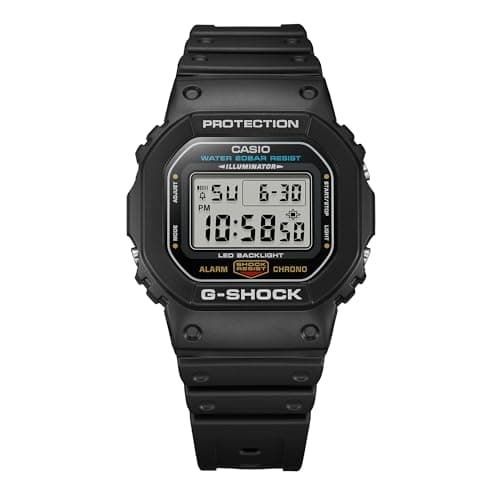
Two of the seven picks take no standard strap at all. The G-Shock DW-5600 uses a proprietary resin band bolted into the case; the Casio A168 has an integrated steel bracelet. The Tissot PRX also has an integrated bracelet with no standard lug width, which is why it is second rather than first on a site built entirely around the question "which strap fits?". The Promaster Dive takes 22mm, the Skyhawk 22mm, the Edifice publishes no lug figure, and the Brycen publishes none either — both of those cells read "—" in the table rather than a guess.
Where the money actually goes in a quartz watch
Since the movement is not where the cost is, it is worth naming where it is. In order: crystal (sapphire roughly doubles a watch's component cost at this end of the market), case and bracelet finishing (the PRX's brushed and polished bracelet is the most expensive-looking object on this page), the power system (a solar cell and secondary battery cost more than a CR2016 holder), radio or Bluetooth (the Skyhawk's antenna and module), and water resistance hardware (a screw-down crown and a certified-compliant case are not free). A dearer quartz watch is not a more accurate quartz watch, and anyone selling you one on that basis is wrong.
The honest case for the cheapest watch here
The Casio A168 costs about a sixteenth of the Tissot and it is on this page for a reason that is not novelty. It keeps better time than any mechanical watch in our registry, it runs for years on a cell, it weighs nothing, and it is small enough at a published 38.6 x 36.3mm to fit a wrist that most of this page overwhelms. What it gives up: a 30-meter rating, which means hand-washing and nothing more; a resin crystal that will scratch; and an integrated bracelet, so no strap options. We rank it last because of those three things and not because of the price — see the digital roundup if it is the direction you want to go.
What is not on this page, and why
No Grand Seiko 9F or Citizen Chronomaster: the high-accuracy quartz watches are the most interesting thing in the category and none has a verified live listing in our registry, so none is ranked. No Timex here either, despite three Timex quartz watches sitting elsewhere on this site — the Expedition North is the first pick on the quartz field page and repeating it here would have made this list a summary of its children rather than a parent with its own argument. And no smartwatch: that is a different product with a charging cable.