How we ranked these
Four criteria, in this order.
1. What the brand actually publishes. A named compound beats the word "luminous", and a published charge time and duration beats a named compound. On this measure Seiko wins outright and it is not close.
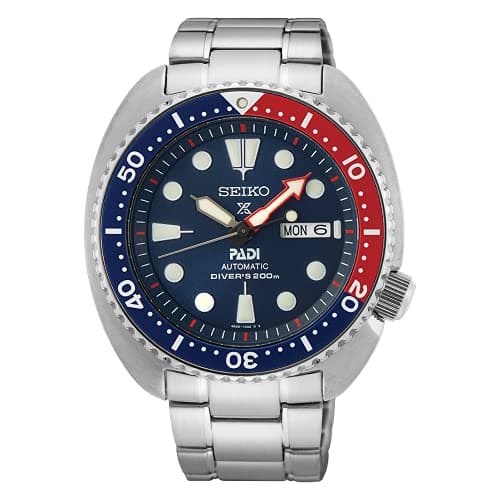
2. Luminous surface area. This is the variable that decides dark legibility and almost nobody discusses it. The same paint on a dive dial with fat applied markers and broad hands will read at a glance where the same paint on slim printed field numerals will not. You can judge it from the product photograph, which is more than you can say for the compound.
3. Stored light or powered light. Luminous paint discharges — it is brightest in the first minutes and dimmest at the hour you most want it, which is the middle of the night after the dial has been in the dark for six hours. A backlight does not care what time it is. We rank the two backlit watches lower because they are not what people mean by lume, and then we tell you they are the better answer to the actual question.
4. Whether the rest of the watch is worth owning. Lume is a feature, not a watch. Nothing is on this page that we would not also recommend on its own merits somewhere else on the site.
What lume actually is, and the one published number
Modern watch lume is a photoluminescent pigment: it absorbs light, stores the energy, and re-emits it slowly as a visible glow. It is not radioactive and it does not wear out from use. Seiko's own customer-service page states this plainly for LumiBrite — it calls it a dramatically improved fluorescent luminous paint that is "completely free of radioactive substances".
The same page gives the only performance figures any manufacturer on this site publishes. Seiko says LumiBrite needs about 10 minutes of exposure to light above 500 lux to reach full brightness, that the light then lasts 3 to 5 hours in the dark, and that this is more than ten times longer than conventional luminous paint.
Read those numbers carefully, because they contain the honest limitation of all lume: 3 to 5 hours. Charge the watch under a desk lamp at 6pm and the glow is largely spent by midnight. Luminous paint is excellent for walking into a dark room, checking the time underwater on a dive you started in daylight, or a cinema. It is not a reliable way to read the time at 4am, and no watch on this page is, whatever the marketing suggests.
What nobody publishes, and what we will not claim
Three absences worth stating, because they are the reason this page is ranked the way it is.
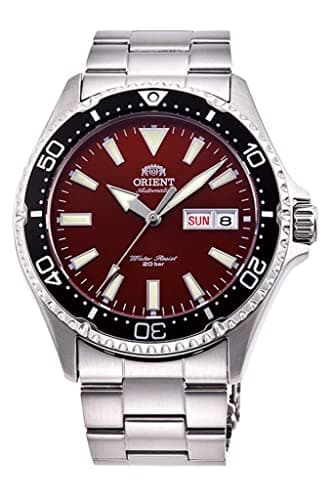
Orient does not name its compound. Orient's own page for the Kamasu lists "luminous hour markers and hands" and the dial description mentions luminous indexes and hands. That is the whole specification. No compound, no charge time, no duration.
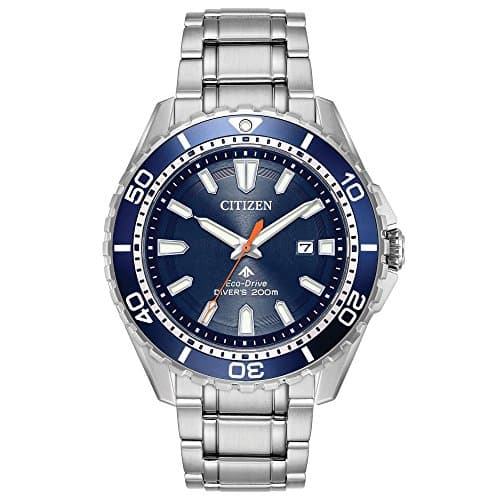
Citizen does not either. Citizen's page for the Promaster Diver BN0191-55L lists "Luminous Hands and Markers" under indices and stops. Same for the rest of the Promaster line we rank.
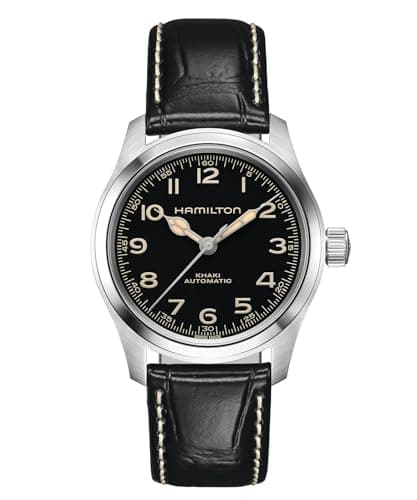
Hamilton names the compound but not the performance. Hamilton publishes Super-LumiNova on the Khaki Field Murph and describes it as a luminescent material applied to hands, dials and bezels to make them visible in the dark. A named, well-regarded compound — with no charge time and no duration attached.
So when you read a review that ranks these watches against each other by how long they glow, ask where the number came from. We could not find one, so we have not printed one.
The winner: Seiko Prospex Turtle
The Turtle is first because it combines the only published lume claim on the page with the most luminous surface area of anything we rank. Seiko publishes a 45mm cushion case with a 48mm lug-to-lug, 22mm lugs, a 200m ISO 6425 diver's rating, a Hardlex crystal and the 4R36 automatic. What matters here is the dial: large applied markers, a broad minute hand and a lumed bezel pip, all treated with LumiBrite.
That combination is why Seiko divers have the reputation they do, and we are comfortable saying it is the best luminous dial on this site. The honest cons are unchanged from our Turtle review: it is a tall, wide watch, the 48mm lug-to-lug will overhang a wrist under about 6.5 inches, and the crystal is Hardlex rather than sapphire at a price where the Orient on this page gives you sapphire.
The cheaper way into LumiBrite
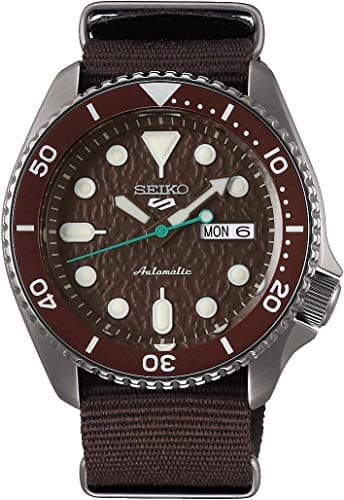
The Seiko 5 Sports SRPD85 is the same lume story on a smaller budget: the same LumiBrite treatment, applied markers and a broad handset, in a 42.5mm case with a 46mm lug-to-lug and 22mm lugs. It is the watch most people should start with, and it leads several of our lists for exactly that reason.
Two honest marks against it for this page specifically. It is rated to 100m rather than 200m and has a push-pull crown rather than a screw-down one, so it is dive styling rather than a dive tool — the distinction is on screw-down crown vs push-pull. And the SRPD reference family has been unusually volatile on Amazon; the listing we link to is live and priced but currently shows a longer dispatch estimate than we would like. If the Turtle is in budget, the Turtle is the better watch.
The two that publish nothing, and still belong here
The Orient Kamasu is third, and its presence is an argument about value rather than lume. Orient publishes nothing beyond "luminous hour markers and hands" — but it also publishes a sapphire crystal on a 200m automatic with a 41.8mm case and a 46.8mm lug-to-lug, at the lowest price on this page by a wide margin. A dive dial with applied markers behind the best crystal here is a combination nothing else offers, even without a lume figure to quote. The full case is on Orient Kamasu vs Citizen Promaster.
The Citizen Promaster Dive Eco-Drive is fourth for a reason that has nothing to do with the compound and everything to do with the dial: at 45mm it is the largest watch here, with correspondingly large markers and hands, and Citizen rates it to 200m with a screw-down crown and caseback. It is also solar, so it never stops — and a watch that is always running is a watch whose lume is always charged by whatever light the room has. The mark against it is the same one we make everywhere: 45mm with a 48.8mm lug-to-lug is a lot of watch, and the crystal is mineral.
Super-LumiNova on a field dial: the Murph
The Hamilton Khaki Field Murph has the most prestigious lume specification on this page — Hamilton publishes Super-LumiNova by name — and it is ranked fifth, which needs explaining.
A field dial is not built for lume. Its numerals are printed or painted in slim strokes and its hands are narrow, because legibility in daylight is the design brief. Put the finest compound in the world on that geometry and there is simply far less glowing surface than on a dive dial with blocks of applied luminous material. Compound is the thing people argue about; area is the thing that decides whether you can read the watch.
None of which makes it a bad watch — it is one of the best field watches we rank, with a 38mm case, 100m, an anti-reflective sapphire crystal and the 80-hour H-10 automatic, and it has its own full review here. It is on this page because if you want a named Swiss compound, this is where you get it. Buy it for the watch, not for the dark.
The honest answer: buy a light, not a glow
The last two picks are not luminous and they are the most useful watches here after midnight.
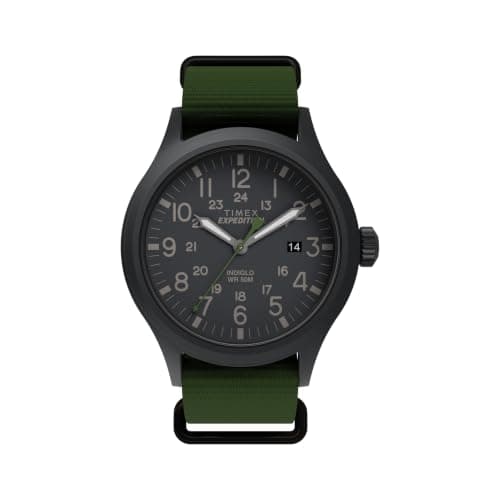
The Timex Expedition Scout has INDIGLO, Timex's electroluminescent night-light. Timex's own instructions describe it as patented electroluminescent technology that illuminates the entire watch face, activated by pressing the crown or a button. The dial lights up uniformly, on demand, as brightly at 4am as at 9pm, powered by the same battery that runs the watch. There is no charging, no discharge curve and no "it was in my sleeve all day". It costs about a tenth of the Turtle.
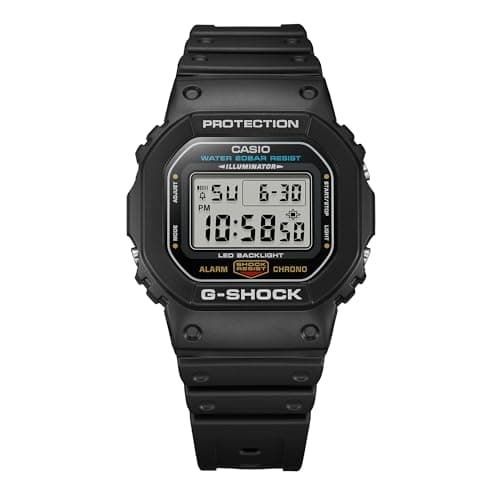
The Casio G-Shock DW-5600 does the same job with an LED backlight, which the current DW-5600UE listing states outright, on top of 200m water resistance, shock resistance and a battery Casio rates for about five years. On a digital display a backlight is not a compromise at all — it is simply how you read the watch in the dark, and it is part of why the square G-Shock wins best watches for work.
We rank them sixth and seventh because this is a lume page and they do not have lume. If the page were titled "which watch can you read in the dark", the order would be reversed, and anyone whose real requirement is night-shift work, early starts or checking the time without waking someone should take that reversal seriously.
What is not on this page, and why
No tritium watch. Tritium tubes are the other real answer to this question: tiny glass vials of tritium gas that glow continuously for years without ever being charged, used by Luminox, Marathon and a handful of others. They are genuinely better than paint for always-on legibility. We do not rank one — there is no tritium watch in our registry with a verified live listing — so rather than write about a watch we cannot point you at, we are naming the gap. The trade-offs to know if you shop for one elsewhere: tritium decays with a half-life of roughly 12 years, so the glow dims permanently over the watch's life, and tritium watches cost more than equivalent painted ones.
No Casio analog or F-91W. The cheap Casios we rank use resin glass and minimal or no luminous treatment; the F-91W's answer to darkness is its backlight, like the G-Shock's. Including them for completeness would have padded the list without adding an option.
No watch whose lume we could not verify. Where a manufacturer does not publish a luminous specification for a reference at all — not even the word "luminous" — we left it off rather than inferring it from a photograph. That rule is why this page is seven watches long rather than twenty.
Our advice, stated plainly
If lume is a pleasure rather than a requirement — you like the glow, you check the time in a dark cinema, you want the dive-watch experience — buy a Seiko diver. LumiBrite on a Prospex dial is the best version of that experience at this end of the market and Seiko is the only brand that will tell you in numbers what it does.
If lume is a requirement, stop shopping for lume. Buy a watch with a backlight, accept that it will be a Timex or a Casio, and spend the saved money on something else. The thing almost no roundup will tell you is that a fifty-dollar INDIGLO Timex is more legible at 4am than a six-hundred-dollar luminous diver, because the Timex is making light and the diver is spending light it collected eight hours ago.
And if you only want one watch to do both, the Turtle and the Kamasu are the two we would choose: real dive dials with real luminous surface area, one with the published claim and one with the better crystal. Neither will wake you up at 4am with a readable dial. Both will be perfectly legible walking out of a restaurant.