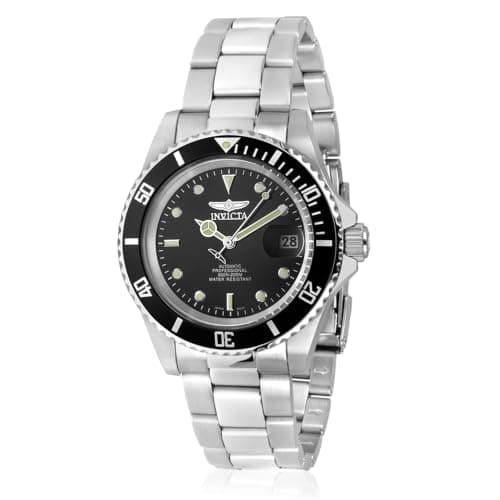
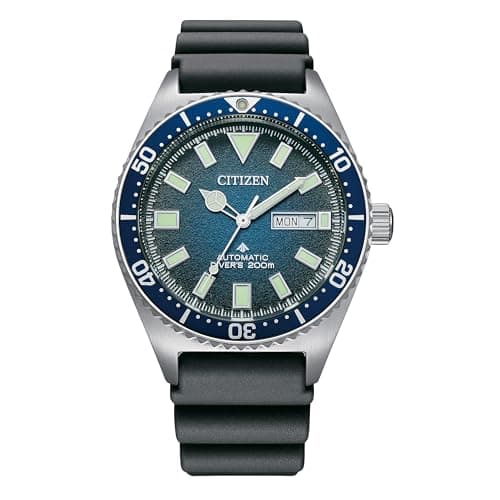
This is the bracket where mechanical watchmaking starts, and it has a hard edge to it that most lists of this kind skate past. Not one automatic watch under $300 on this site has a sapphire crystal. Every single one of the six below is mineral glass or Seiko's Hardlex, a hardened mineral. The cheapest sapphire automatic in our registry is the Orient Kamasu, and on the live feed it sits above this ceiling — which means the honest way to describe $300 is not "the bracket where you get sapphire" but the bracket where you get a real movement and nothing else is upgraded yet.
So the ranking is built on three things, in this order. First, what the movement actually does, because that is what you paid for: whether it hacks (the seconds hand stops when you pull the crown, so you can set the watch to the second) and whether it hand-winds (you can wind it up without shaking it awake). Second, what the case is rated for, which spans 30 meters to a certified 200 meters inside these six picks — a bigger spread than the prices. Third, how it fits, measured on published lug-to-lug span rather than case diameter. Price breaks ties, and it breaks one of them decisively at the bottom of the list.
A word on what an automatic is, since the bracket attracts first-time buyers. There is no battery: a weighted rotor spins as your wrist moves and winds a mainspring, which is why an automatic left in a drawer stops and a quartz watch does not. It is also why none of these keeps time as accurately as a twenty-dollar Casio — mechanical watches are measured in seconds per day, not seconds per month. If that trade sounds wrong to you, quartz against automatic lays it out properly before you spend anything.
One more thing we will not do: print an accuracy figure for any of these. Seiko does not publish a seconds-per-day specification for the 4R36, Orient does not publish one for the F6922 or the F6724, and we could not read one from Citizen for the 8204. Numbers you see quoted for these calibers on forums are owner measurements, not manufacturer specifications, and we are not going to launder them into a spec table.
What the movement actually does, caliber by caliber
This is the part of the decision that is genuinely technical and genuinely matters, and it separates these six watches more than the prices do.
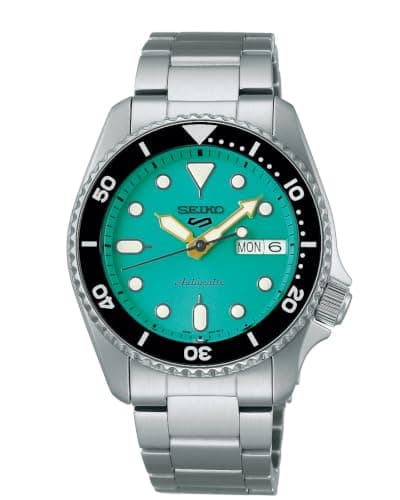
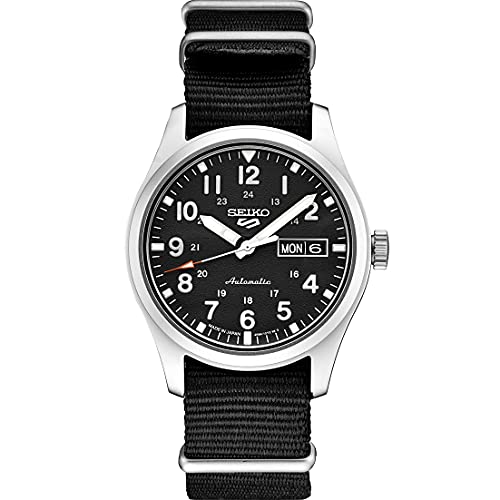
Seiko 4R36 — in the SRPK33 and the Seiko 5 Sports Field. Hacks and hand-winds. You can set it to the second against your phone and you can wind it by hand on a Monday morning instead of shaking it. For a first mechanical watch that combination is worth real money, because it removes the two things people find most annoying about owning one.
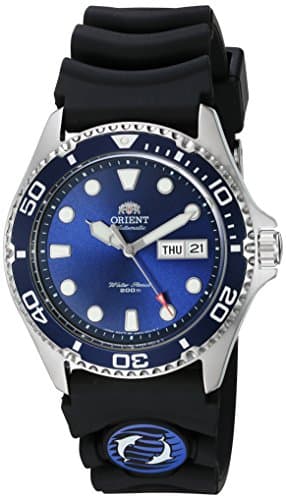
Orient F6922 — in the Ray II. Hacks and hand-winds too, matching the 4R36 feature for feature, which is the reason Orient punches so far above its price with enthusiasts. It is the same in-house Orient caliber used in the dearer Kamasu.
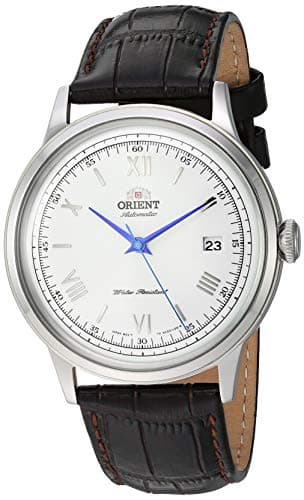
Orient F6724 — in the Bambino V2. Does not hack. The seconds hand keeps running while you set the time, so you cannot sync it precisely. On a dress watch that bothers most people less than it sounds, but it is a real difference from the Ray II sitting next to it on this page.
Seiko NH35A — in the Invicta Pro Diver. This is the industrial version of Seiko's own movement, sold to other brands, and it is the reason a seventy-dollar watch can be a real automatic at all.
Citizen 8204 — in the Promaster NY0129. Citizen's in-house automatic, and the only one here sitting inside an ISO-certified dive case. Its hand-winding action is a touch less refined than Seiko's in the hand, which is on its card.
The water-resistance spread is wider than the price spread
Three of these six publish 200m: the Citizen (ISO 6425 certified, with a screw-down crown and caseback), the Orient Ray II, and the Invicta. Two publish 100m: both Seikos, which is plenty for swimming but comes without a screw-down crown. One publishes 30m: the Orient Bambino, which means rain and handwashing and nothing else — it is a dress watch and it is not pretending otherwise.
Those ratings are not marketing tiers, they are different pieces of hardware, and what the water-resistance numbers actually mean explains why a 30m watch should never see a pool. The practical point for this bracket: if you want one automatic watch and you do not want to think about it, buy one of the three 200m picks. If you want a watch for a jacket and a collar, the Bambino is the better-looking object and you will simply take it off before you swim.
The fit numbers, and the one that surprises people
Case diameter is the number everyone quotes and the least useful one. Lug-to-lug span is what decides whether a watch overhangs your wrist, and the published figures here do something counterintuitive.
Seiko publishes 38mm with a 44.2mm lug-to-lug for the SRPK33. Citizen publishes 41mm with a 50mm lug-to-lug for the NY0129 Promaster. That is a case only three millimeters wider spanning nearly six millimeters more of your wrist, and it is the single most useful fact on this page if your wrist is under about seven inches. Orient publishes 47mm for both the 41.5mm Ray II and the 40.5mm Bambino. Our watch size for your wrist guide shows how to measure yours in about a minute, and it is worth the minute before you spend $250.
Lug width matters too, because it decides what straps you can buy. Four of the six take 20mm, which is the most common size on the market. The Ray II takes 22mm. The Bambino takes 21mm, an unusual width with a genuinely thinner selection — our lug width chart has the full table, and the 21mm strap roundup is the short answer if you buy the Orient.
What $300 does not buy, stated plainly
Sapphire. Not on any automatic in this bracket. The nearest thing is Seiko's Hardlex, which is harder than ordinary mineral glass but not in the same class. If a scratch-resistant crystal is your priority, the cheapest way to get it is to stretch past this ceiling to the Orient Kamasu, and sapphire against mineral is the honest accounting of whether that is worth doing.
A long power reserve. Nothing here publishes anything like the 80 hours Hamilton publishes for its H-10 and H-50 calibers. These movements are in the forty-ish-hour class, which in practice means an automatic you wear five days a week and leave off at the weekend will have stopped by Monday.
Swiss anything. Every movement in this bracket is Japanese, and that is not a criticism — it is why the bracket exists at all. The cheapest Swiss mechanical we rank is several times the price, on best automatic watches under $1,000.
Should you just spend $500 instead?
Sometimes, and here is the honest version of that argument. The step from $300 to $500 buys exactly two things in our registry: a sapphire crystal and more choice. It does not buy a better movement — the 4R36 and F6922 in these picks are the same calibers you get up there — and it does not buy a better water-resistance rating than the certified 200m already on this page. So if sapphire is not what is stopping you, the money is better spent on two or three straps than on the next rung. If it is, the rung is best automatic watches under $500, which shares three picks with this page and adds the sapphire ones.
What we left off, and why
The Seiko 5 SNK809 — the 37mm watch that taught a generation what a rotor does — is not here, and not because of its size. Seiko discontinued it, and the surviving listing now asks several times what it sold for new, which puts it above this ceiling and makes it poor value even if it were below. The Orient Kamasu and Mako III are both above $300 on the live feed as we write, which is exactly why this page stops where it does. Every Hamilton in our registry starts well above the ceiling. And no quartz watch is on this page at all, by definition — if you want the best watch under $300 regardless of movement, that is best watches under $300, where quartz takes several of the slots on merit.
Where to go next
If you specifically want a diver, three of these six are divers and the full field is on best automatic dive watches. If 38mm is the number you actually care about, our best 38mm watches page explains why that size is so hard to buy and ranks the five references on this site that publish it. And if you came here from a luxury diver, the Tudor Black Bay alternatives page ranks three of these picks against Tudor's published specification.