Fifty dollars is the ceiling almost nobody needs to go above. Above it you are buying leather from a named tannery, hardware from a named foundry and a maker's margin; below it you can buy the best functional version of every strap material there is. This page proves that by ranking one strap per material rather than six leather straps, because a rotation of six materials is a better use of fifty dollars than one expensive strap.
We have a tighter bracket too — best watch straps under $20 — and a leather-specific one at best leather straps under $50. This page is the cross-material version: what to buy if you have fifty dollars and no idea which material you want yet. Every strap below is a live Amazon listing, every width and hardware figure is from the maker's own page, and where a maker does not state whether a strap has quick-release bars the table says so rather than assuming.
Before anything else, get the width right. A strap narrower than your lugs rattles and one wider will not fit at all, and the number is stamped nowhere useful on most watches — our lug width chart lists it for dozens of references and how to measure covers doing it yourself with a ruler.
Leather: quick-release is the whole feature
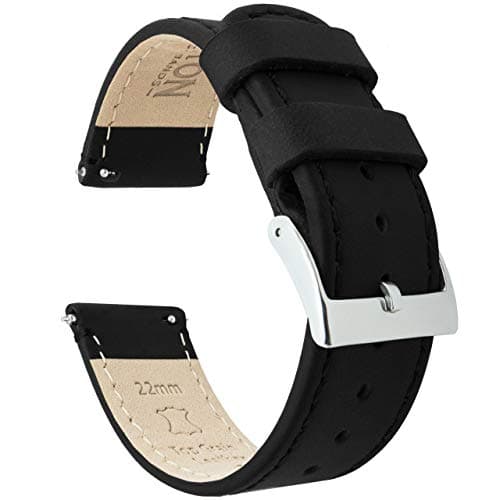
The Barton Quick-Release Leather tops this page for one reason that has nothing to do with the hide: its spring bars have integrated levers, so the strap comes off without a spring bar tool and without the scratch on the lug that a slipped tool leaves. Top-grain leather at this price is good rather than extraordinary, and it will darken and soften with wear. If you want the dressiest leather in the bracket instead, the Archer Top-Grain is on our leather roundup. And remember what leather cannot do: our how long straps last page is blunt about sweat and pool water.
Rubber: FKM is the material that matters
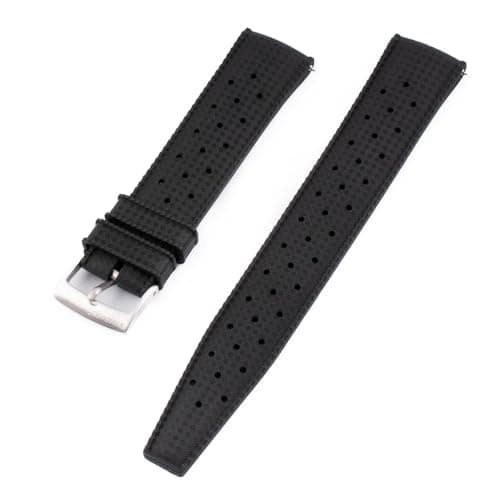
The StrapHabit Tropical is FKM — fluoroelastomer — rather than silicone, and the difference is real: FKM resists UV, salt, chlorine and skin oils in a way silicone does not, and it does not attract lint the way a soft silicone strap does. StrapHabit publishes the full dimensions, including a stated 22-to-20mm taper, a 3-to-5mm thickness and 316L hardware, which is more than most makers in this category will commit to. Our FKM vs silicone page explains why that is worth paying about twenty dollars more for.
Steel: a bracelet for under thirty dollars
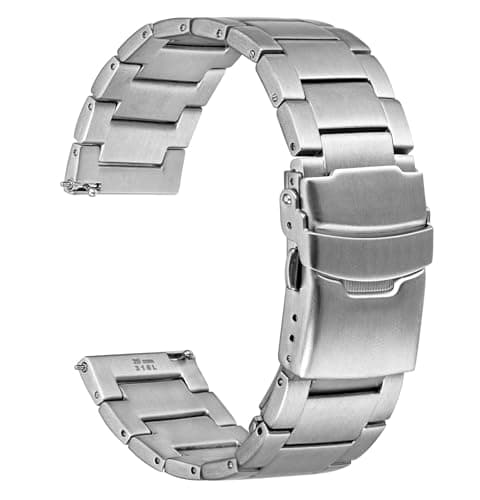
The WOCCI Heavy-Duty is solid-link 316L stainless with a double-locking deployant clasp, which is a specification that cost three times this not long ago. Two honest caveats. It is a straight-end bracelet, so on a diver with curved lug ends there will be a small gap — our bracelet roundup covers the curved-end options. And WOCCI does not state whether it ships with quick-release bars, so the table says so rather than guessing; you may need to remove links to size it.
Perlon, mesh and nylon: the cheap seats, done well
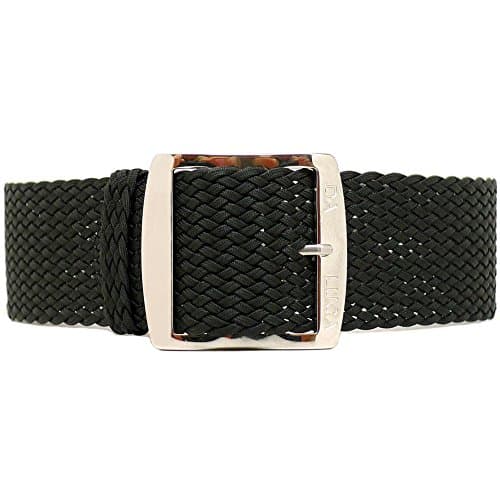
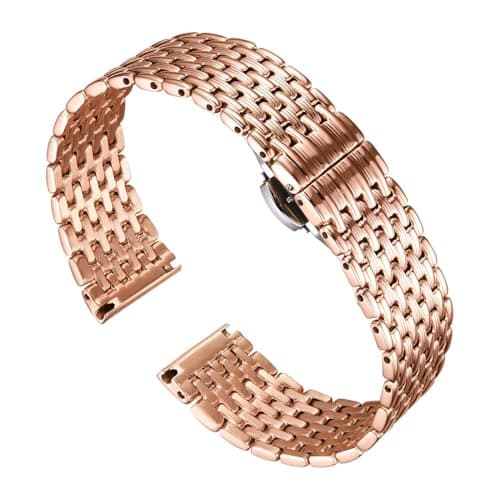
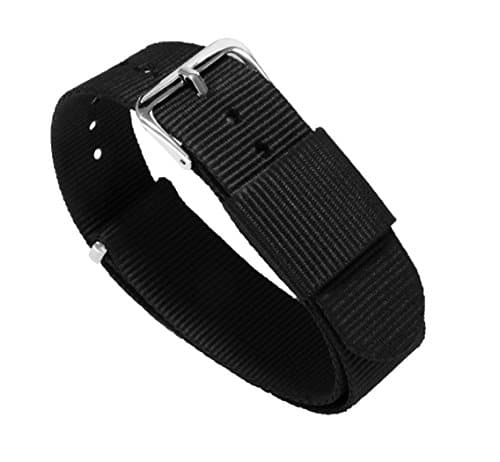
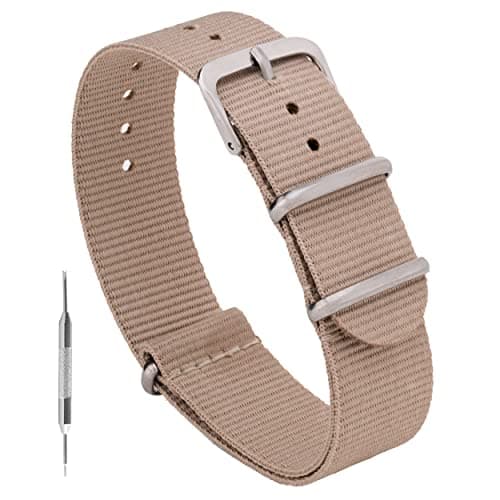
The Da Luca is the premium perlon — a denser braid and a properly finished buckle — and perlon's trick is that it has no holes, so it adjusts to any size and breathes better than anything else here. The BINLUN mesh is the dress option, thin and polished with a butterfly clasp and widths down to 12mm for small cases. And the Barton Ballistic Nylon is the default NATO: pass-through, no tools, in every width from 18 to 24mm. Each of those three costs under forty dollars and two of them are under twenty-five.
The ten-dollar argument
The Benchmark Basics NATO is our budget pick and it is on this page to make a point. It is the same ballistic nylon construction as the Barton at roughly half the price, with less refined hardware and fewer colour options. If you have never changed a strap before, buy this one first: it costs less than lunch, it fits in thirty seconds with no tools, and it will tell you whether you actually like the look before you spend forty dollars finding out. Nothing on this page is a worse buy for being cheap.
What fifty dollars does not buy
Three things, honestly. Named leather — Horween, Shell Cordovan and the European tanneries start above this bracket, and the one Horween strap we rank sits just under it. Curved-end bracelets fitted to a specific watch, which is the MiLTAT territory above this page's ceiling. And a strap that will last a decade: at this price the hardware and the stitching are good, not heirloom, and a daily-worn leather strap at thirty dollars is a one-to-two-year item. That is fine — it is also why buying several materials beats buying one expensive strap.