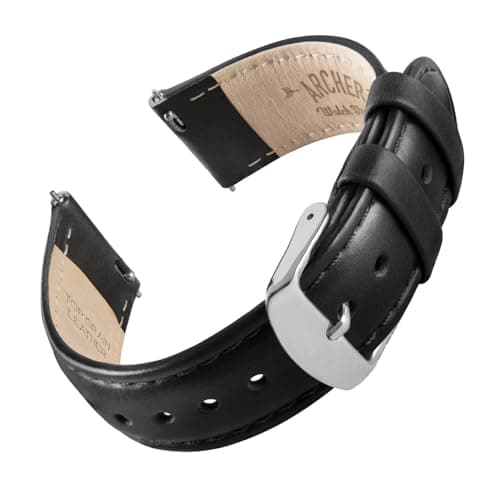
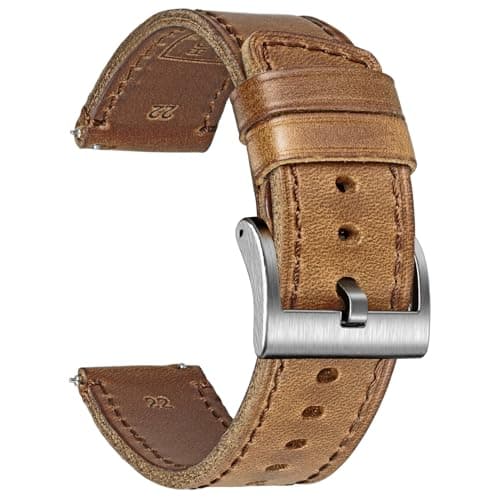
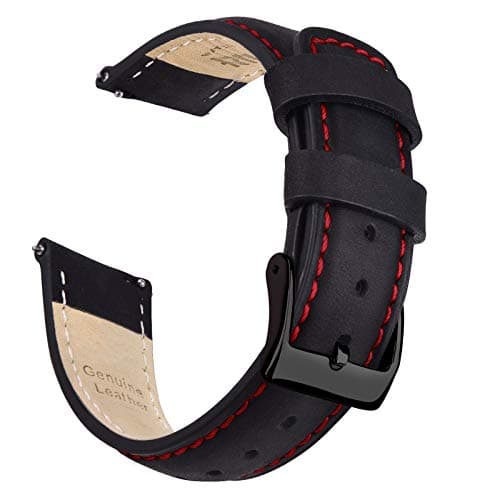
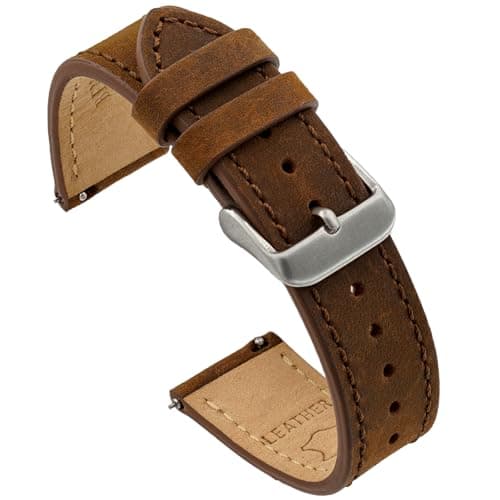
Fifty dollars is more than enough for a leather watch strap. That is the honest starting point for this page: the entire useful range of leather straps for an affordable watch sits under that number, and the difference between the cheapest strap here and the most expensive is about twenty dollars and one grade of hide.
What separates them is the leather itself — top-grain and Horween hides age differently from corrected splits — the hardware, whether the stitching is decorative or structural, and whether the strap uses quick-release bars. Those are the four things we ranked on, and the spec table lists the width range and fitting type for every one.
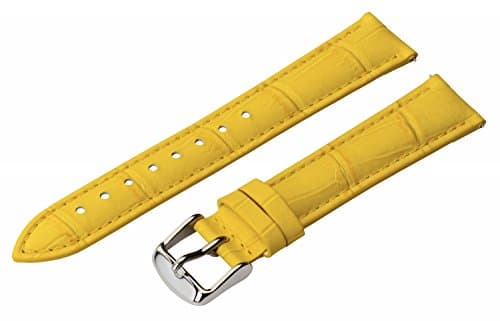
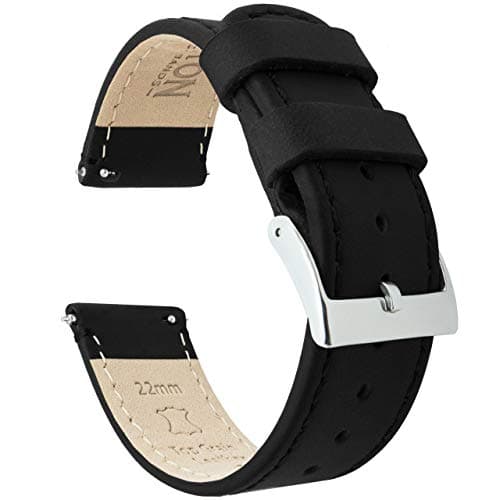
The short version: the Barton Quick-Release Leather is the default buy — top-grain leather, quick-release bars, sold from 16mm to 24mm, around thirty dollars. The Hemsut Horween is the hide upgrade for anyone who cares how a strap ages. And the Clockwork Synergy croco-grain is around fifteen dollars, which makes trying a color a decision rather than an investment.
What you are actually paying for in leather
Three things, in order of how much they matter. First the hide: top-grain and full-grain leathers keep the natural surface of the skin and develop a patina as they age, while cheaper corrected leathers have that surface sanded off and a synthetic finish printed on, which eventually cracks rather than softening. Second the hardware: a stainless buckle and properly seated spring bars, rather than plated steel. Third the stitching, which on a good strap holds the layers together and on a cheap one is decoration over glue.
Horween and Crazy Horse, explained
Both names turn up constantly and mean different things. Horween is a Chicago tannery, not a leather type — its hides are well regarded and a strap that names them is telling you where the leather came from. Crazy Horse is a finishing style: a waxed pull-up leather that lightens where it bends and marks easily, then darkens back over time. If you want a strap that looks better scuffed, that is the one to choose; if you want it to stay pristine, it is the one to avoid.
Quick-release is the feature to prioritize
All of the straps here have quick-release spring bars: a tiny lever you push with a fingernail so the bar retracts and the strap comes off in seconds, with no tool and no risk of gouging the lugs. It costs essentially nothing extra and it is the difference between owning straps and actually changing them. That now includes the Benchmark Crazy Horse, whose listing we had previously recorded as standard bars — it is quick-release.
Leather and water do not mix
This is the category's one real limitation and it is worth stating plainly. Leather absorbs sweat and water, then stiffens, smells and eventually cracks. It is the wrong strap for swimming, the gym or a hot summer, and no price fixes that — a fifty-dollar strap fails in water the same way a fifteen-dollar one does, just more expensively. Keep a silicone strap or a NATO for those days and the leather will last years.
How to make a cheap leather strap last
Rotate it. A strap worn every day of the week absorbs sweat faster than it can dry and will be finished within a year; the same strap worn three days a week lasts several. Beyond that: take it off before showering, let it dry away from direct heat if it does get wet, and treat the leather occasionally with a conditioner if it starts to feel dry. That is the entire maintenance regime.
Where the extra thirty dollars actually goes
Between the cheapest and most expensive strap on this page the differences are: a better grade of hide that ages rather than cracks, a heavier buckle, and stitching that is doing structural work. Those are real and you will see them after two years. What you do not get by spending more is a strap that survives water, or one that fits better — length and width are the same across the range. Buy the cheap one to try a color and the better one for the watch you wear most.