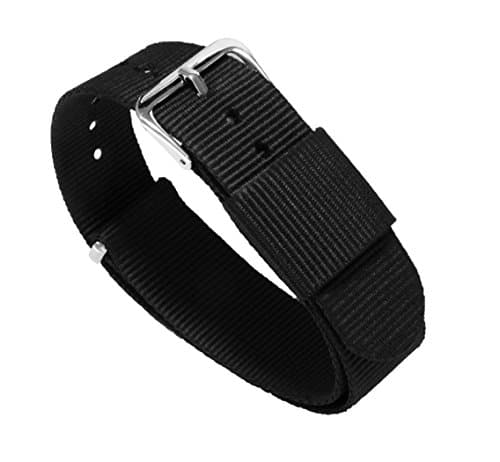
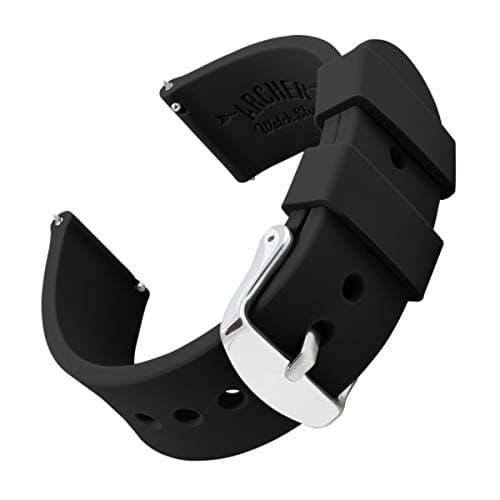
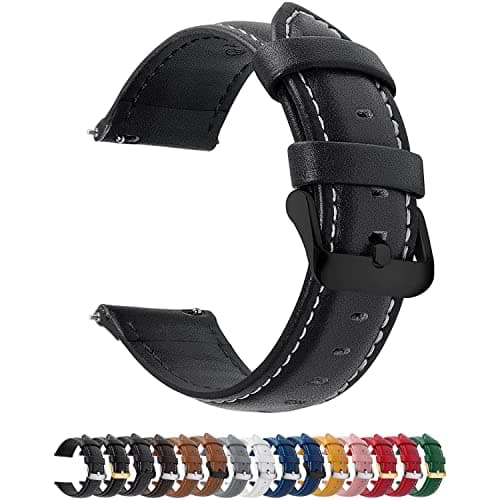
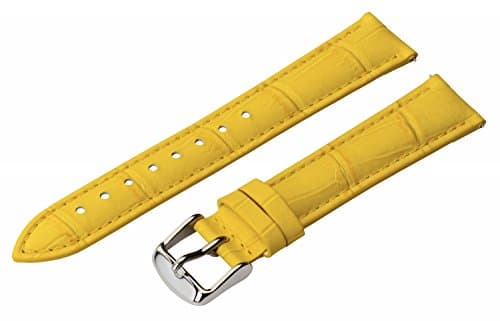
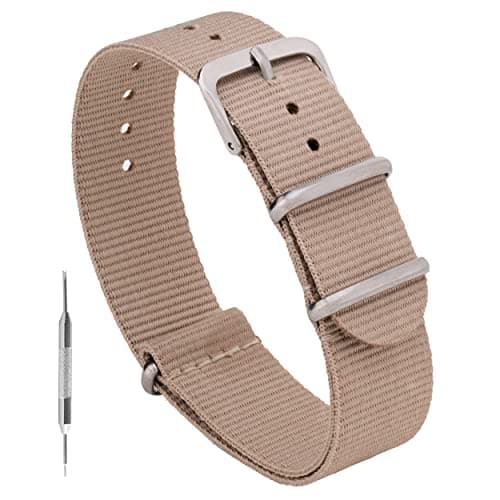
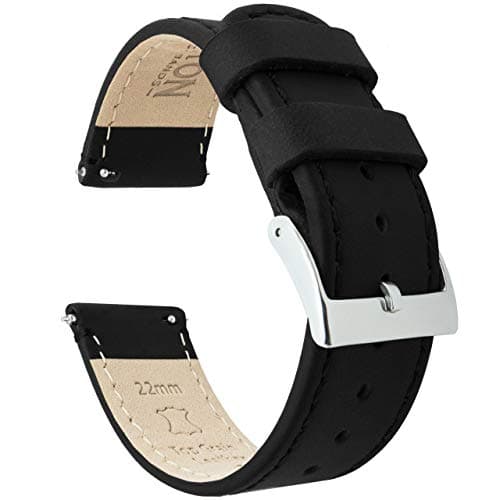
Eighteen millimeters is the width that watches got smaller and the strap market did not quite follow. A lot of ranges start at 20mm, which is fine until you own a 37mm Seiko SNK809 or a 34mm Timex Marlin and discover that half the straps you liked are not made in your size. Every strap below is genuinely available in 18mm — that is the entry requirement for this page.
Beyond availability, they are ranked on the things that decide a strap: material and how it behaves on a wrist, hardware quality, and whether it uses quick-release bars, which is the feature that turns swapping straps from a job into a thirty-second habit. The spec table lists the full width range each one is sold in, so you can see how much headroom you have if you buy a second watch.
The short version: the Barton Quick-Release Leather is the strap to buy first, because top-grain leather with quick-release bars is the best combination available at this price and it goes down to 16mm. The Barton Ballistic Nylon is the tough, washable answer. And the Benchmark NATO is under ten dollars, which makes trying a color essentially free.
Check the width before anything else
Lug width is the gap between the lugs where the strap sits, measured in millimeters, and it has to match exactly — an 18mm strap in a 20mm gap rattles and looks wrong, and a 20mm strap will not go in at all. Measure it with a ruler or a caliper, or look your model up in our lug width chart. It is almost always an even number.
Which watches actually take 18mm
As a rough rule, 18mm belongs to watches under about 38mm and to older designs. On this site that means the 37mm Seiko 5 SNK809 and the 34mm Timex Marlin Reissue, and it also covers a large share of vintage watches, dress watches and women's watches. If your watch is 36mm or smaller, 18mm is the first width to check — and if it is 40mm or larger, you almost certainly want 20mm or 22mm instead.
Proportion matters more at this width
On a small watch the strap is a larger share of what you see, so material and color carry more weight than they do on a 44mm diver. A thick, heavily padded strap will make a 36mm watch look like it is wearing borrowed clothes; a slim leather or a single-layer nylon keeps the proportions right. This is the one width where we would actively steer you away from the chunkiest options.
Quick-release bars are worth the extra dollar
A quick-release strap has a small lever built into the spring bar. Push it with a fingernail and the bar retracts, so the strap comes off in seconds with no tool and no risk of gouging the lugs — the injury almost everyone inflicts on their first watch with a screwdriver. Four of the six here have them. NATO-style nylon is the exception and needs no tools by design: it threads under the caseback, which also means the watch stays on your wrist if a spring bar fails.
Length is the spec nobody checks
Width decides whether the strap fits the watch; length decides whether it fits you. Most straps ship in a standard length suiting wrists roughly between 6 and 8 inches. That is worth extra attention at 18mm, because small watches are often bought for smaller wrists — if yours is under about 6.25 inches, look for a strap sold in a short option, or a NATO, which adjusts across a much wider range by design. Our measuring guide covers how to work it out.
What to buy first
If you own one small watch and no spare straps, buy two: a leather quick-release for everyday and a nylon for the weekend and the summer. That is roughly forty dollars and it genuinely feels like owning two more watches. The one thing to avoid is buying a strap set in the wrong width because it was cheap — at 18mm the sizes are less forgiving than at 20mm and there is no adapting your way out of it.
How we picked
We do not run a testing lab
We compiled the published manufacturer specifications for every watch here — case size, lug-to-lug, lug width, water resistance, movement and crystal — did the wrist-fit and value math, and scored each pick against a published rubric. The scores are judgments from documented research — they are not measurements we took or wrist-time we logged, because we do not have these watches and we are not going to pretend we do. Where a spec could not be verified we wrote "data unavailable" rather than guessing.