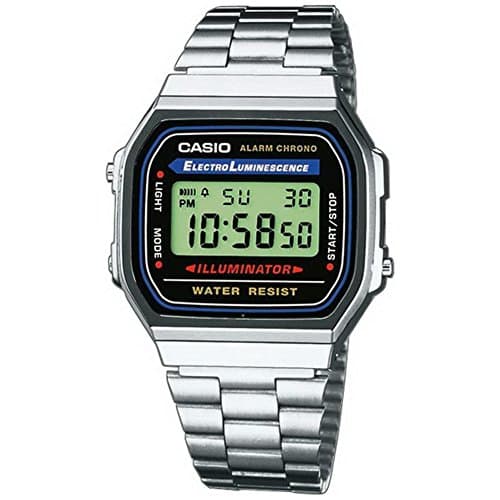
Under two hundred dollars is the most honest bracket in watches, because nothing in it is pretending. There is no finishing to admire, no mechanical movement to romanticise and no resale value to protect — what you are buying is a specification, and at this price the specifications are startlingly good. Two of the six watches below are rated to 200m. Two run on light and never need a battery. One is a steel chronograph for about a hundred dollars.
This hub already has best tool watches under $500 and under $1,000. This is the rung below both, and it has a different character: above two hundred dollars you start paying for sapphire, titanium and complications, while below it you are buying raw durability. Both are legitimate. Only one of them is cheap.
A word about the brand mix, since it is conspicuous. Four of the six picks are Casio, and that is not laziness — at this price Casio simply builds most of the genuinely tough watches on the market, and Citizen's Eco-Drive is the one real alternative to it. We would rather say that than pad the list with watches that only look the part. The ranking order is published water resistance and shock rating, then power source and what it asks of you, then function, then fit and lug width.
What 200m buys at this price
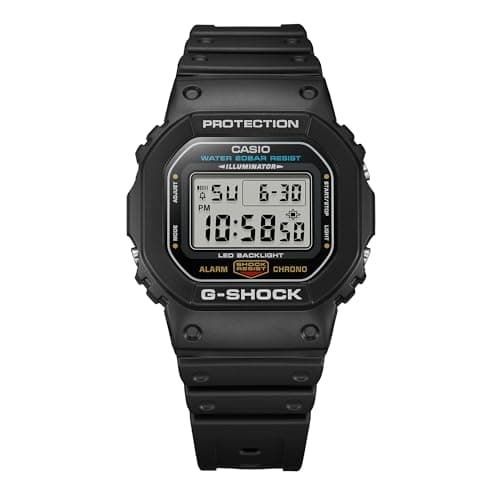
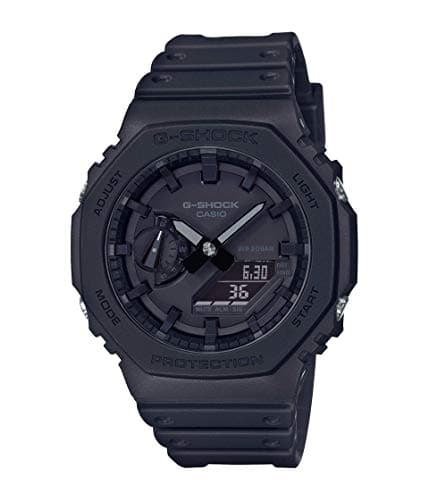
Both G-Shocks here publish a 200m rating, which outperforms most steel watches at three times the money. The reason is that resin is a better material for the job than steel: it absorbs shock instead of transmitting it, it does not need a gasket-compressing screwed crown because the pushers are sealed individually, and it costs almost nothing to mould. If you want to understand the trade properly, our water resistance explainer sets out what each rating permits — the short version is that 200m covers anything a person actually does in water.
The GA-2100 against the DW-5600
This is the real decision on this page, and the published numbers are closer than people expect. Casio gives the square DW-5600 as 48.9 × 42.8 × 13.4mm and the octagonal GA-2100 as 48.5 × 45.4 × 11.8mm — so the GA-2100 is 2.6mm wider and 1.6mm thinner, and the weights are within a gram of each other. The square is a pure digital with a 1/100-second stopwatch; the octagon is analog-digital with world time across 31 zones and five alarms. We give it to the GA-2100 for most people because the thinner case is the difference between a watch that fits under a cuff and one that does not. Our DW-5600 vs GA-2100 page runs it to the end.
The light-powered option
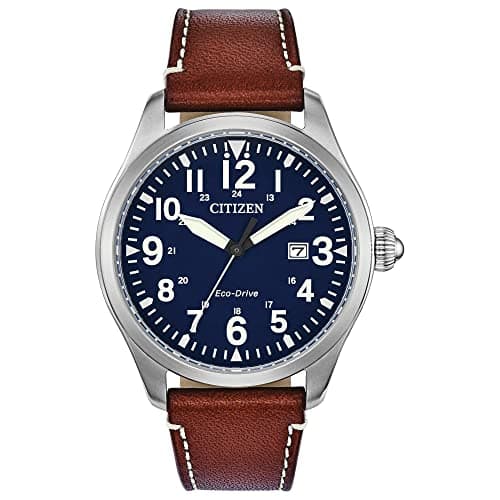
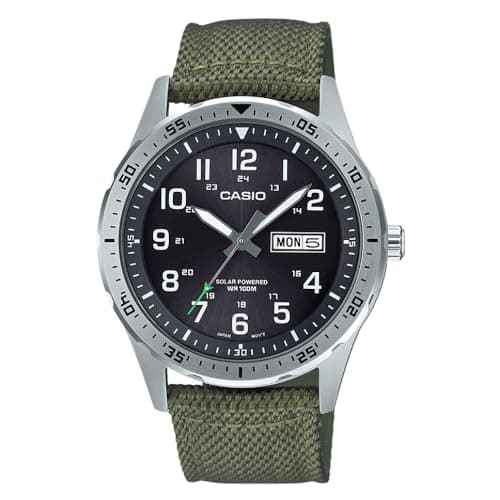
The Citizen Eco-Drive Garrison is the most conventional watch here — 42mm steel, 100m, a 22mm lug width — and the one that asks the least of you. Eco-Drive charges from any light source, so there is no winding and no battery, which also means the case is never opened and its water resistance never depends on whoever reseated the gasket. The Casio MTP-S120L does the same trick for less money on a NATO strap, with a 49mm lug-to-lug that is the one figure to check against your wrist. Our what is Eco-Drive page explains the charging and dark-running.
The chronograph slot
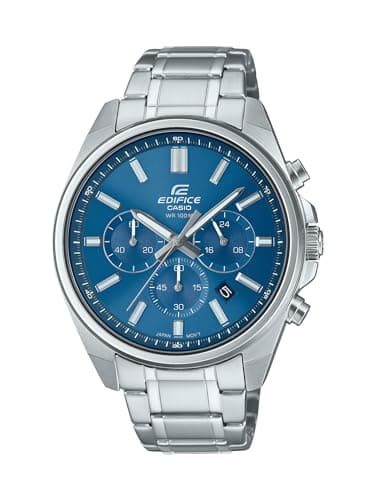
The Casio Edifice EFV-650D is the cheapest steel chronograph we rank: 43.5mm, 100m, a 1-second quartz chronograph, mineral crystal. It is on this page because a working chronograph for about a hundred dollars is a genuine specification bargain and because the alternatives in this hub start at two and a half times the price — see chronographs under $500. What you give up is the sapphire and the finishing.
The honest limits of this bracket
Three, and they matter. No sapphire: every crystal on this page is mineral or resin, so expect scratches eventually — our sapphire roundup shows where that specification starts. No mechanical movement: nothing under two hundred dollars in our registry is a tool-grade automatic, and the cheapest we would recommend is on best automatic watches under $500. And no straps on three of them: both G-Shocks and the A168 have fixed or integrated bands and take no standard strap at all, which is the single most common surprise on this page. The Citizen, the Casio MTP and the Edifice are the three to buy if strap-swapping is part of the point.
How we picked
We do not run a testing lab
We compiled the published manufacturer specifications for every watch here — case size, lug-to-lug, lug width, water resistance, movement and crystal — did the wrist-fit and value math, and scored each pick against a published rubric. The scores are judgments from documented research — they are not measurements we took or wrist-time we logged, because we do not have these watches and we are not going to pretend we do. Where a spec could not be verified we wrote "data unavailable" rather than guessing.