A chronograph is a watch with a stopwatch built into it: press the top pusher to start, press again to stop, press the lower one to reset. Under five hundred dollars they are all quartz, and that is good news — a quartz chronograph times to a fifth or a twentieth of a second, costs a fraction of a mechanical one, and does not need a service every five years to keep the pushers working.
What separates them at this price is not the timing function, which all four do identically well. It is the crystal, the water-resistance rating, whether the movement runs on light or a battery, and — the thing nobody checks until it is too late — whether you can actually read the sub-dials at a glance.
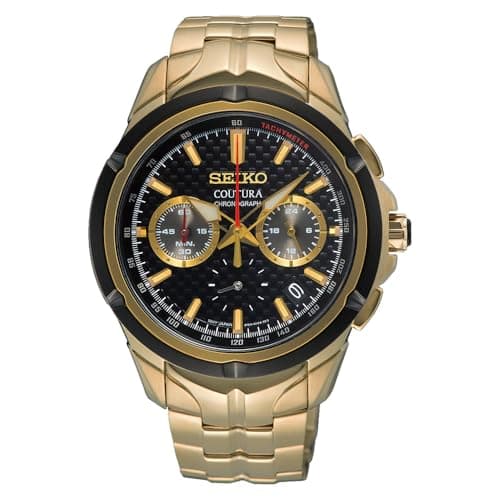
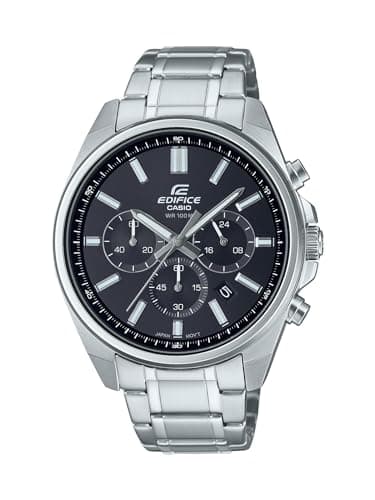
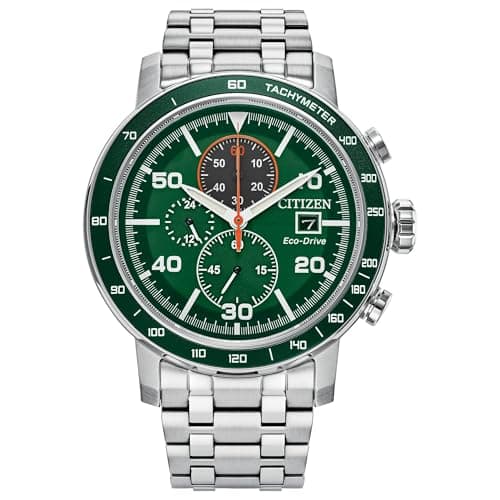
The short version: the Citizen Eco-Drive Brycen is the best chronograph value we know of — a sapphire crystal, 100m water resistance and a solar movement, for under three hundred dollars. The Seiko Coutura is the dressier answer, also with sapphire. And the Casio Edifice is a steel chronograph for around a hundred and twenty dollars, which is roughly what a strap costs on the others.
Sapphire is the specification that actually separates them
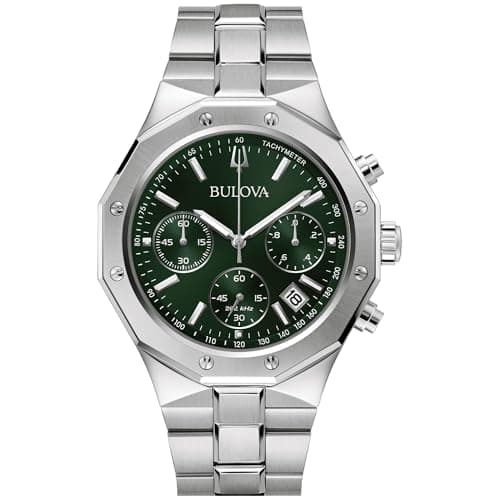
Chronographs are worn as everyday watches and everyday watches get scratched. Two of the four here — the Citizen Brycen and the Seiko Coutura — use sapphire crystals, which do not scratch under normal use. The Bulova and the Casio use mineral, which will pick up hairlines over a few years. Over a decade of ownership this is the single difference you will notice most, and at this price it is available, so take it.
Solar removes the battery problem
A chronograph drains a battery faster than a plain three-hander, because running the timing hands takes power. Citizen's Eco-Drive sidesteps that entirely: the movement charges from daylight and indoor light and stores a reserve for the dark. On a watch you use the stopwatch on regularly, that is a genuine practical advantage rather than a marketing one.
Read the sub-dial layout before you buy
This is the specification nobody checks. A chronograph has two or three small sub-dials, and how they are laid out decides whether the watch is usable. Look for good contrast between the sub-dial and the main dial, hands long enough to reach the printed scale, and — most importantly — work out which sub-dial is the running seconds and which is the elapsed minutes. On a badly laid out chronograph you will glance down and read the wrong one for a year.
Water resistance varies more than the price does
The Citizen Brycen, Seiko Coutura and Casio Edifice are all rated to 100m, which is a real swim-and-shower seal. The Bulova Classic Chronograph is 30m, which is splashes and rain only. That is a bigger practical difference than anything else on this page, and it does not track price at all — check the column above before you decide.
Size, and the honest problem with chronographs
They run large, because the sub-dials need room. Three of these four are 43mm or 44mm; the Seiko Coutura at 42mm is the smallest. If your wrist is under about 6.75 inches, a 44mm chronograph will look and feel like a lot of watch, and the category simply does not offer many small options. That is a real constraint rather than a preference.
Should you buy a chronograph at all?
Honestly, only if you like how they look, and that is a fine reason. Almost nobody times anything with one — the phone in your pocket is better at it. What a chronograph gives you is a busier, more mechanical-looking dial and something to press. If you want a tool watch whose complication you will actually use, a GMT is the more useful buy.