Almost everyone who asks this question is looking at a Seiko dial. “21 jewels” and “24 jewels” are printed there like a boast, nothing on the watch explains them, and the internet offers two contradictory answers: that they are precious stones and that they are meaningless. Neither is right.
What a jewel physically is
A jewel in a mechanical watch is a small disc or cup of synthetic ruby — lab-grown corundum, the same material family as sapphire crystal, chosen because it is extremely hard and takes a very smooth polish. It is pressed into the plate at a point where a steel pivot spins, so the pivot turns against ruby rather than against brass or steel. Synthetic corundum has been cheap for over a century; the jewels in a modern watch cost a trivial amount. They are not there as decoration and they are not valuable.
What they do
Two things. They reduce friction, which means the mainspring's energy does more work turning the hands and less work heating up bearings. And they reduce wear, which is the important one: a gear train running at 21,600 beats an hour turns an enormous number of times over a decade, and a steel pivot in a brass hole will eventually wallow the hole out of round. A ruby bearing holds its shape far longer, which is why jewelled movements can be serviced and kept running rather than replaced.
A third type does something different again: the pallet jewels and the impulse jewel in the escapement are not bearings at all, but working surfaces that transmit the impulse to the balance. They are counted in the same total, which is part of why the number alone tells you so little.
Why 17 became the magic number
A simple hand-wound watch needs 17 jewels to jewel every meaningful point — the balance, the escapement and the wheels of the going train. “Fully jewelled” meant 17, and for decades that was the mark of a properly made watch. Everything above 17 is jewelling the parts that were historically optional: the automatic winding system, the calendar work, the reverser wheels. That is why automatics carry higher counts than hand-wound watches of the same quality — the rotor and its gearing need bearings that a hand-wound movement simply does not have.
So what does 21 jewels mean on a Seiko?
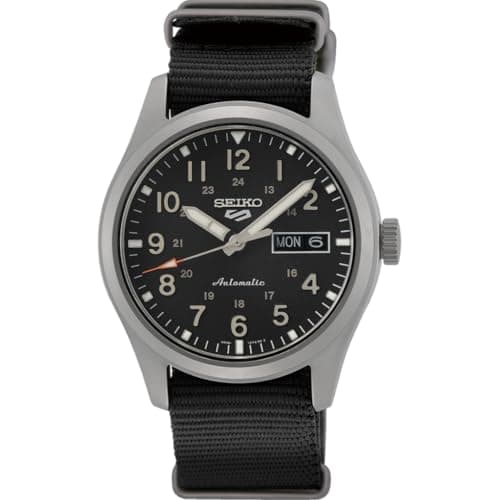
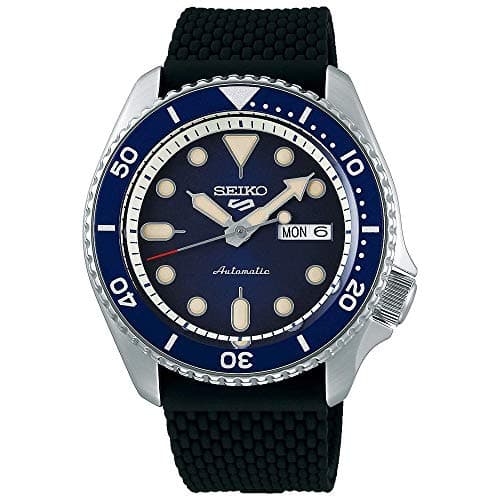
On a Seiko dial it almost always identifies the calibre. The 7S26, the automatic that powered the SNK809 and the old SKX for years, is a 21-jewel movement. The 4R36 that replaced it across the Seiko 5 Sports line — the movement in the SRPD93 and the Seiko 5 Sports Field on this page — is a 24-jewel movement. Orient publishes 22 jewels for the F6922 in the Kamasu.
Now look at what actually separates those movements. The 4R36 hacks, so the seconds hand stops and you can set the time precisely. It hand-winds, so a watch that has stopped can be started without shaking it. The 7S26 does neither. That is a real, daily, you-will-notice-it difference, and it has nothing to do with the three jewels. The 22-jewel Orient F6922 also hacks and hand-winds, and it comes in a 200m case with a sapphire crystal — specs that matter far more than its jewel count sitting between the two Seikos. We compare those two directly on Orient Kamasu vs Seiko 5.
When a high jewel count is a warning sign
Historically, inflated counts were a marketing trick: makers added non-functional jewels to plates purely so a bigger number could be printed on the dial, and some markets eventually regulated the practice. Today, a modest count from a known calibre — 21, 22, 24 — is normal and honest. A very high count on an unbranded movement from a seller who will not name the calibre tells you more about the seller than the watch. The number to ask for is the calibre name, not the jewel count.
And the watch with no jewel count at all
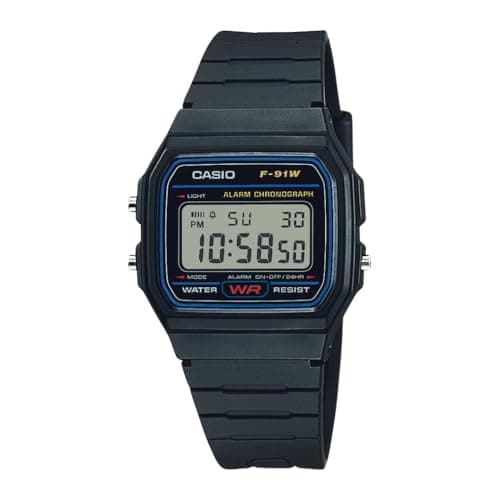
The Casio F-91W on this page is the useful counterexample. Quartz watches are rarely described by jewel count, because a quartz module has almost no high-speed mechanical train to protect — a stepper motor advances the hands once a second, and the parts that would need ruby bearings in a mechanical watch do not exist. The cheapest watch on this page keeps better time than any of the automatics above it, and it does so with no jewels worth printing on a dial. That is the cleanest proof that the number is not a quality grade. The wider argument is quartz vs automatic watches.
What to read on a spec sheet instead
If you are comparing two mechanical watches, these five tell you more than the jewel count ever will. Does it hack? Does it hand-wind? What is the power reserve — see what power reserve means. What crystal is fitted — sapphire or mineral. What is the water resistance, and is the crown screwed down — screw-down vs push-pull. Every one of those changes how the watch behaves on your wrist. The jewel count does not.
Do jewels need servicing?
The jewels themselves effectively never wear out. What ages is the oil around them: watch oils degrade and migrate, and a dry jewel is where wear starts. That is the actual reason mechanical watches are serviced periodically, and it is the same for a 21-jewel movement and a 24-jewel one. We do not publish a service-cost figure because the number varies by movement, country and workshop, and inventing one would be worse than leaving it out.
Where this sits in the mechanical picture
If this question came up while you were choosing your first mechanical watch, the two pages that answer the rest of it are manual vs automatic and best watches for beginners. If it came up because you are looking at a Seiko, our ranking of the brand is best Seiko watches.
Sources and what we are not claiming
The jewel counts above come from the movement documentation and reference databases listed below, and from Orient's published figure for the F6922. We have not opened these movements and counted. Where a figure could not be verified for a specific listing, the spec table shows a dash. Our method is on how we review.