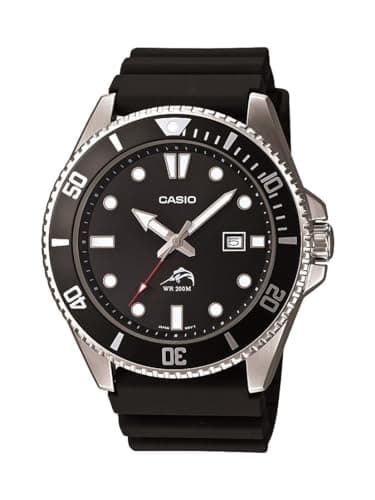
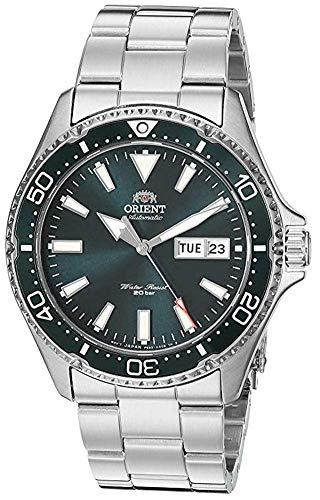
Start with what Omega actually publishes, because a page like this is worthless without it. For the steel 42mm Seamaster Diver 300M, reference 210.30.42.20.01.001, Omega's own product page states: a 42mm steel case, water resistance of 30 bar (300 meters / 1000 feet), a unidirectional rotating black ceramic bezel with a white enamel diving scale, a domed scratch-resistant sapphire crystal with anti-reflective treatment on both sides, a self-winding movement with Co-Axial escapement — Master Chronometer Calibre 8800 — with a 55-hour power reserve, "Certified Master Chronometer, approved by METAS, resistant to magnetic fields reaching 15,000 gauss", a helium escape valve, a polished black ceramic dial with laser-engraved waves, 20mm between the lugs, a 49.90mm lug-to-lug, a thickness of 13.56mm, a weight of about 194g, and a US list price of $6,700.
Now split that list in two, because the split is the whole page. What is matchable at a fraction of the price: a 200m-or-better rating, a unidirectional dive bezel, a screw-down crown, a sapphire crystal, and an automatic movement. Several watches below publish all five. What is not matchable at any price in our registry: the 300-meter rating, the ceramic bezel and ceramic dial, the METAS Master Chronometer certification and its 15,000-gauss magnetic resistance, the 55-hour reserve, the helium escape valve, the finishing, and the resale. If any item on the second list is the reason you want a Seamaster, no page can help you and you should save for the Omega.
So the picks below are ordered by which part of the first list you refuse to give up. Sapphire and the in-house automatic first; then the case proportions, which is where this page found something genuinely interesting; then an ISO 6425 certified or ISO-compliant dive rating, which is the closest thing in the affordable world to a third-party-verified claim; then zero maintenance; then price.
One honest note about the helium escape valve, since it is the feature people most often cite as the reason the Seamaster is special. It is a saturation-diving feature: it lets helium that has permeated the case during a long decompression escape without popping the crystal. Unless you are living in a saturation chamber it does nothing for you, and no watch below has one. We mention it because the valve is real engineering that genuinely cannot be bought for $300 — and because for almost every buyer its practical value is zero.
The proportions finding: the Samurai is the closest thing on the wrist
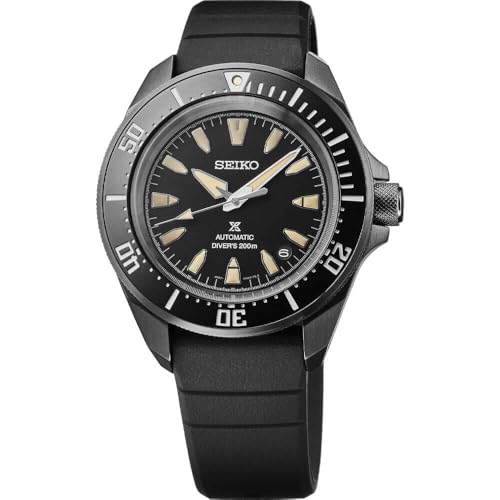
This surprised us enough to re-check both figures. Omega publishes the 42mm Seamaster Diver 300M at a 49.90mm lug-to-lug with 20mm between the lugs. Seiko publishes the Prospex Samurai at 41.7mm with a 49.5mm lug-to-lug and 20mm lugs. Those are, within a few tenths of a millimeter, the same footprint — and because lug-to-lug span rather than diameter is what decides whether a watch overhangs your wrist, as we argue in watch size for your wrist, the Samurai is the pick for anyone who tried a Seamaster on and liked exactly how it sat. It also means a 20mm strap bought for one fits the other.
What the Samurai does not match is the crystal: Seiko publishes Hardlex, a hardened mineral glass, not sapphire. That is the trade, and it is why the Samurai is second rather than first.
ISO 6425: the one certification you can actually buy
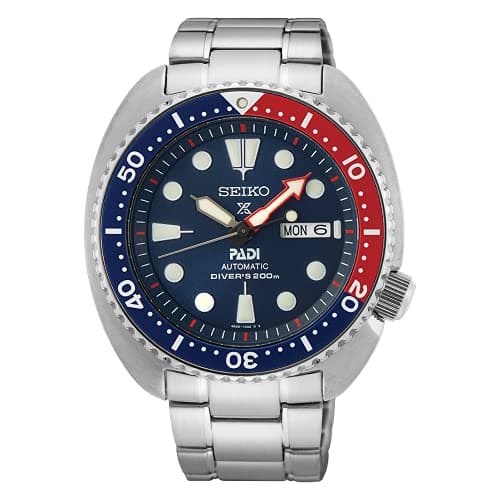
METAS certification is not available at any price below. What is available is ISO 6425, the international divers' watch standard, which covers the bezel, the crown, legibility in darkness at 25cm, salt-water resistance, shock and thermal shock rather than pressure alone. Seiko publishes 200m to ISO 6425 for the Prospex Turtle. Citizen publishes 200m ISO-compliant for the Promaster Dive Eco-Drive and the Promaster Dive Super Titanium. Orient publishes 200m for the Kamasu but does not publish an ISO certification — and we say that on the Kamasu's own card rather than letting our top pick off lightly. If the certified rating is what you are buying, the pick is a Seiko Prospex or a Citizen Promaster, not our number one. The standard itself is explained in what makes a watch a dive watch.
The titanium argument, and the weight number
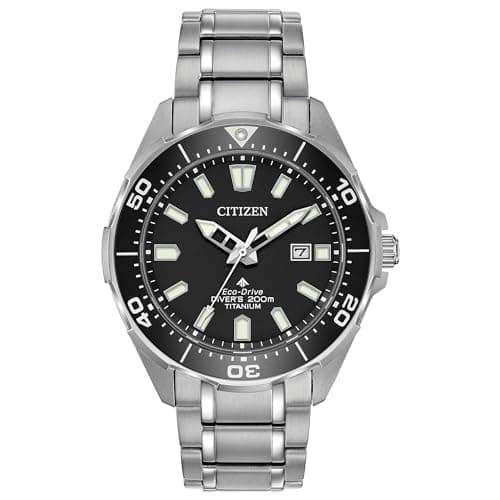
Omega publishes about 194g for the steel Seamaster on its steel bracelet. That is a substantial watch. The Citizen Promaster Dive Super Titanium is the one pick here that answers weight directly: a 44mm titanium case with an ISO-compliant 200m rating and a light-powered movement. Citizen publishes its Super Titanium as surface-hardened with Duratect — that is Citizen's own claim rather than a measurement we can verify, and we carry it as such, the same way we do on the titanium roundup. What it will not give you is sapphire; Citizen publishes mineral glass on that reference.
Zero maintenance: the thing the Omega cannot do
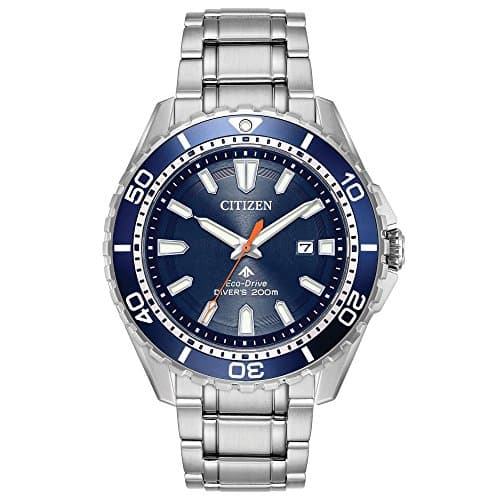
Here is one place a $290 watch genuinely beats a $6,700 one. The Promaster Dive Eco-Drive is light-powered: it needs no winding, no battery change and no case opening, which also means its gaskets are never disturbed in normal ownership. A Co-Axial Omega needs servicing on a schedule and a service costs real money. If you want a dive watch that sits in a drawer for four months and is running when you pick it up, the Omega is the wrong purchase and the Citizen is the right one. Our solar against automatic comparison lays out the full trade.
The bezel, and where the money visibly goes
Omega publishes a ceramic bezel insert with a white enamel diving scale, and a polished ceramic dial with laser-engraved waves. Nothing below has a ceramic bezel; every pick here uses an aluminum insert or a steel bezel with printed markings. Ceramic does not fade and does not scratch in normal use, aluminum does both, and after five years that difference is visible from across a room. This is the clearest example of what the price buys, and it is worth being plain about it: these are not secretly-as-good watches, they are watches that match the functional specification and not the execution.
Should you buy a pre-owned Seamaster instead?
It is a fair question and the honest answer is that it depends what you are optimizing. A pre-owned Seamaster gets you every item on the unmatchable list, including the resale, at a discount to the $6,700 list price — but it also gets you an unknown service history and a watch you will worry about. The picks below get you the functional specification, nothing to worry about, and enough change left over to buy four straps. We sell neither, and we are not going to pretend the Omega is a bad watch; it is a better watch, and most people do not need a better watch than a Kamasu.
What is not on this page
No homage with Seamaster-specific styling cues, because we are not going to rank a watch for looking like something else — the same position we take on the Submariner page, where the one explicit homage is ranked near the bottom on purpose. No Seiko SKX, because it is out of production; the current answers are on the SKX page. And no Omega: we have no Omega listing in our registry, we would not rank a $6,700 watch on an affordable site if we did, and every figure we have quoted for it above is Omega's own published specification, linked in the sources.
The same exercise against a smaller luxury diver
The Seamaster is a 42mm watch, which is why several 41-45mm picks above can match its proportions. Run the same comparison against a 39mm Tudor and the proportions argument inverts entirely: nothing in our registry pairs that case size with a certified 200m rating. Our Tudor Black Bay alternatives page works through what that leaves you with, and it names the one watch here that does wear that small along with the specification it gives up to do it.