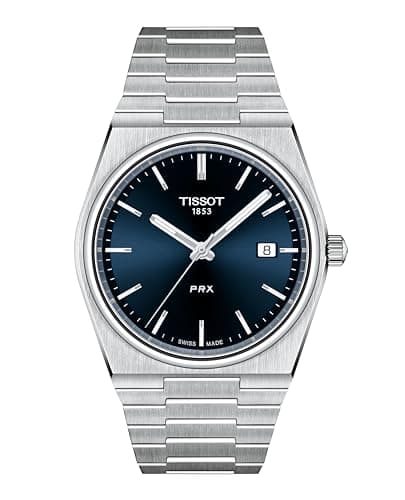
Let us deal with the word first. In the watch industry "luxury" means a Swiss or Japanese house with an in-house movement, hand-finishing and a four- or five-figure price. Nothing under $500 is that, and any page that tells you otherwise is flattering you. What this bracket genuinely offers is the thing luxury buyers are actually paying for underneath the label: a specification. Sapphire. A Swiss movement. A complication. An in-house calibre. A 200-meter rating. You can have any one or two of those under $500 — you cannot have all of them, and this page is about choosing which.
That is why this page exists below the under-$1,000 version, which is the rung above it and whose picks are mostly Hamiltons and a Seiko Prospex. It shares a single pick with that page, because at $500 the Swiss automatics drop out entirely and what replaces them is a different argument: Swiss quartz, Japanese mechanical complications, and a solar pilot's watch with a 200-meter case.
The criteria, in ranking order. First, does it carry a specification that is normally sold at a much higher price — sapphire, a complication, an in-house movement, a certified-level rating. Second, execution: case finishing, bracelet or strap quality, dial printing, the things that make a watch read as expensive across a room. Third, whether the maker is a house with a real history, because that is part of what the word means and it is checkable rather than a matter of taste. Fourth, fit, as always on lug-to-lug rather than diameter. Fifth, price — and this page spans less than twofold from the cheapest pick to the dearest.
One hard limit stated up front, because the search that brings people here often has a brand in mind. There is no Rolex, Omega, Tudor, TAG or Longines on this page and there cannot be: none of them makes a watch anywhere near this price, new. If a listing claims otherwise, it is a different product than you think. The honest versions of that search are our alternatives pages — Datejust, Seamaster, Submariner and Explorer — each of which quotes the reference watch's published specification and then says plainly what an affordable watch cannot match.
The $500 ceiling, and how it is measured
Every pick sat under $500 on the live price feed when this page was built, and the stamp under the table is the date that feed was generated. No price on this site is typed into copy: if a listing moves above the ceiling the table moves with it, and if the feed goes stale the number disappears rather than quietly misleading you. A band page you cannot check is just an assertion.
1. Which specifications are buyable at this price
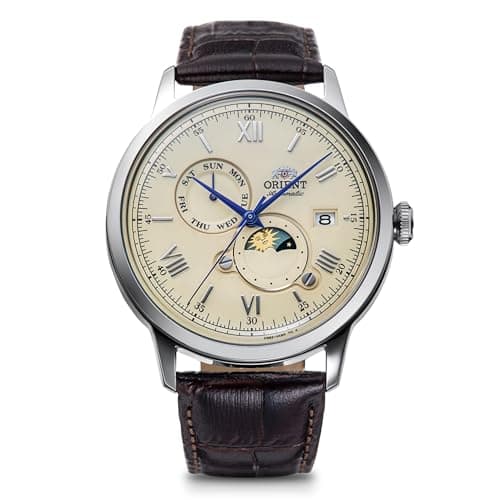
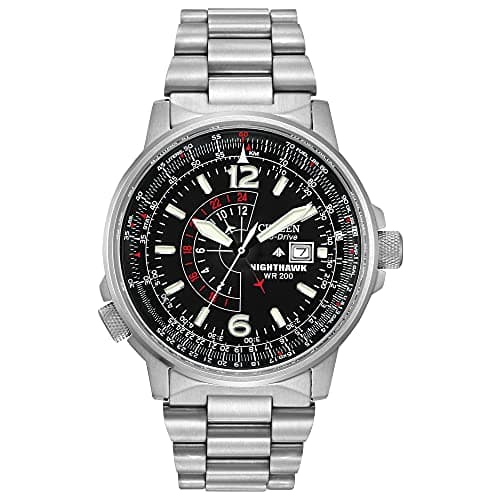
Sapphire: yes — Tissot publishes it on the PRX, and Citizen publishes it on several Eco-Drives, though not on the Nighthawk reference here. A Swiss movement: yes, but quartz. The PRX in this bracket is Swiss quartz; the Swiss automatics start roughly where this page stops. A complication: yes — the Bambino Sun & Moon's day-night indication is driven by Orient's in-house F6B24, and a mechanical complication under $400 is genuinely unusual. An in-house movement: yes, twice, both Orient. A 200-meter case: yes — Citizen publishes 200m for the Nighthawk, which is a remarkable rating on a pilot's watch. Hand-finishing, a display caseback worth looking through, a chronometer certification: no, none of those, at any price on this page.
2. Execution: where the PRX earns its ranking, and where it loses points
The Tissot is first because of how it is made rather than what it contains. The brushed and polished integrated bracelet, the case chamfers and the waffle dial are finished to a standard nothing else in this bracket matches, and it is the one watch here that strangers assume is expensive. Two honest marks against it. It is quartz, and plenty of people shopping the word "luxury" want a mechanical watch. And it has no standard lug width — the bracelet is integrated into the case, so the entire strap catalogue on this site is unavailable to it. On a site built around lug width we are not going to leave that out.
3. The mechanical case: two Orients and a real complication
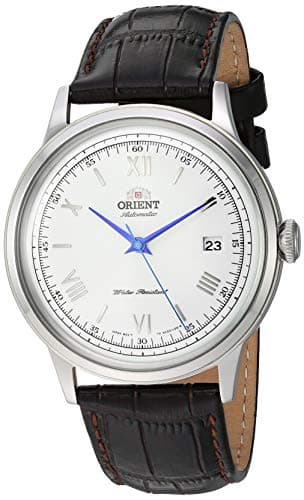
Orient is Seiko's sibling company and makes its own movements, which is a rarer thing at this price than the market lets on. The Sun & Moon uses the in-house F6B24 and adds a day-night indication on the dial; the Bambino V2 uses the F6724 under a domed mineral crystal in the classic dress-watch shape. Both publish 30m water resistance, which is the limitation and we are not going to soften it: that figure means hand-washing and rain, not swimming, as our water-resistance guide explains. Neither movement hacks, so you cannot stop the seconds hand to set the time to the second — the automatic roundup covers why that matters to some buyers and not others.
4. The two that buy you function instead of finish
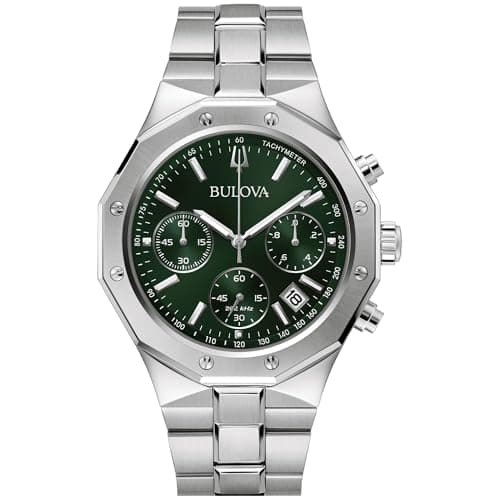
The Citizen Nighthawk is here for a specification that looks like a misprint: a pilot's watch with a slide-rule bezel, a light-powered Eco-Drive movement and a published 200-meter rating. It is the most functional watch on the page by a distance, and the only one that will never need either a battery or a wind. The Bulova Classic Chronograph is the dress-chronograph answer, with the caveat that Bulova publishes 30m for it — the lowest rating here alongside the two Orients. Neither is as nicely finished as the Tissot, and both do things the Tissot cannot.
Fit and crystal, laid out
Case sizes here run from 40mm to 43mm, which is a narrow and sensible spread. Published lug-to-lug: 47mm for both Orients; Tissot, Citizen and Bulova publish none for these references, so those cells are blank rather than estimated. Crystal: sapphire on the Tissot; mineral on the Nighthawk, the Bulova and the Bambino V2, with the Sun & Moon on mineral too. Lug width: 21mm on both Orients, which is an awkward size and genuinely narrows your strap options — see the 21mm roundup, which exists precisely because of watches like these. The Tissot takes nothing, and Citizen and Bulova publish no figure for these two.
What this bracket cannot buy you, stated plainly
Four things, and it is worth reading them before you spend. There is no Swiss mechanical movement under $500 in our registry — the entry point is the Hamilton Khaki Field Mechanical, which sits on the next rung up. There is no chronometer certification of any kind. There is no hand-finished movement: these are industrially assembled calibres, which is why they are reliable and affordable. And there is no resale value — every watch on this page is worth materially less the day after you buy it, which is true of almost all watches and acutely true here. Buy for the watch, not the investment.
What is not on this page, and why
No Hamilton, no Seiko Prospex, no mechanical GMT: all of those sit above $500 on the live feed, which is what the general under-$500 page and the under-$1,000 luxury page exist for. This page shares one pick with the first and one with the second, deliberately, because its argument is about which specification reads as luxury rather than which watch is best overall. And no microbrand: several make genuinely well-finished watches in this bracket, and none has a verified live listing in our registry, so none is ranked.