Most "watches for big wrists" lists are just lists of large diameters, which is the least useful way to shop. A 45mm watch with short, steeply curved lugs can sit better than a 42mm watch with long flat ones, and the figure that tells you which is which is the lug-to-lug span — the distance from the top lug tip to the bottom one. That is the measurement we print in every spec table on this site, and it is the first criterion here.
The criteria in full, in ranking order. First, lug-to-lug against diameter: a case that is wide but compact across the wrist is better than one that is merely large. Second, weight, which is the criterion almost every list of this kind ignores — a 45mm steel watch on a steel bracelet is a genuinely heavy object, and after eight hours you notice. Third, whether the strap or bracelet actually goes round: a large wrist needs the long end of a strap's size range, and a bracelet needs enough links. Fourth, the usual specification questions — crystal, water resistance, what powers it. Fifth, price.
A note on who this page is for. If your wrist measures roughly 7.5 inches / 19cm or more, everything here will fit and look proportionate. Between about 7 and 7.5 inches, read the lug-to-lug column before buying the 45mm picks — our watch size for your wrist guide gives the method, and how tight a watch should be covers the bracelet-sizing half of the problem. If you are the opposite case, the page you want is the small-wrist roundup.
This page deliberately crosses the site's categories. There is a titanium diver, a mechanical diver, a radio-set world-timer, two solar chronographs, an ana-digi G-Shock and a budget quartz diver on it, because "I have a big wrist" is not a style preference — it is a constraint, and it applies whatever kind of watch you were already shopping for. The dive-hub version of this question, which ranks only divers, is here; it shares two picks with this page and nothing else.
1. The lug-to-lug figures, printed
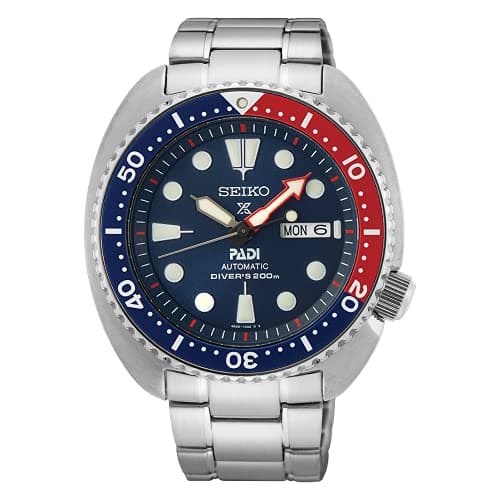
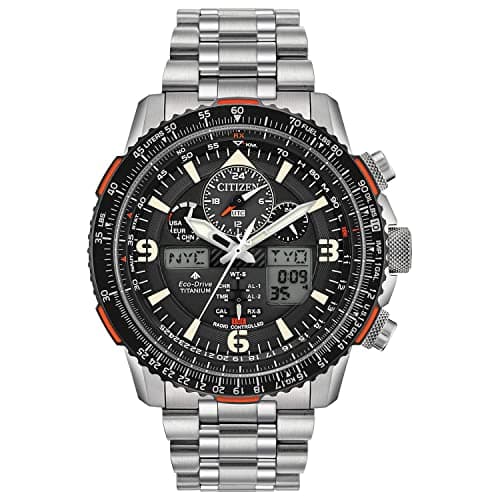
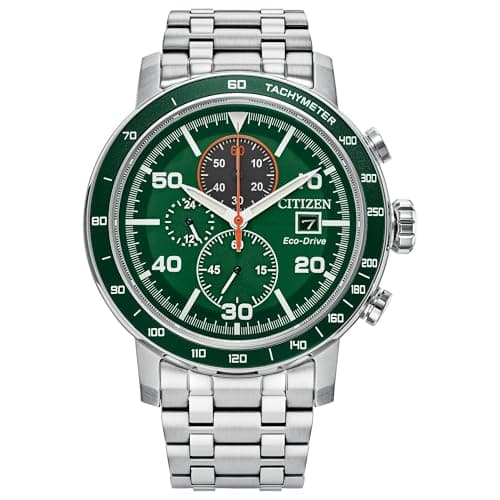
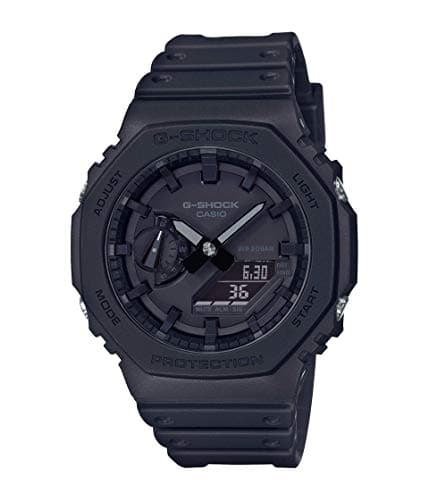
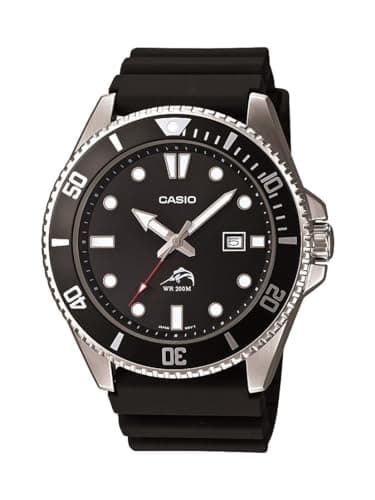
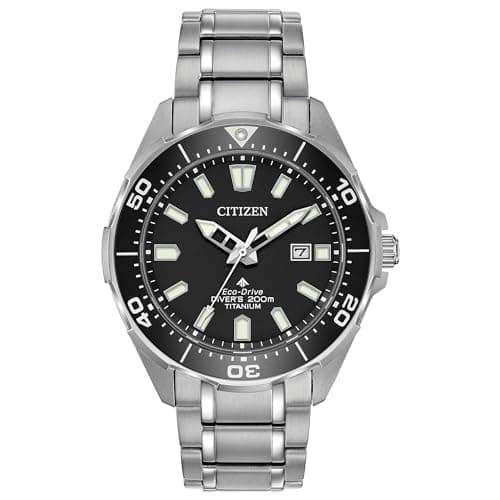
Where the maker publishes one, here is what you are choosing between. Seiko publishes 45mm with a 48mm lug-to-lug for the Prospex Turtle. Casio publishes 45.4 × 48.5mm for the GA-2100 and 44 × 48mm for the Duro. Citizen publishes 44mm for the Promaster Super Titanium and 45mm for the Skyhawk A-T but does not publish a lug-to-lug for either, and the Coutura Solar and the Brycen have no published span either — those cells read "—" in the table rather than a number we guessed.
The useful reading: the Turtle is the standout. It is the largest diameter on this page by nominal size and one of the shortest across the wrist, because the cushion case has no protruding lugs at all. If you have tried a 44mm watch and found it overhung, the Turtle is the one to try next.
2. Weight: the criterion nobody lists
This is why the titanium Citizen is ranked first. Titanium's published density is roughly 4.5 g/cm³ against about 8.0 for the 316L stainless steel used in most watch cases — so a titanium case of identical dimensions is around 44% lighter, a figure we work through properly in titanium against stainless steel. On a 38mm dress watch that difference is a curiosity. On a 44mm diver with a thick bezel it is the difference between a watch you wear every day and one you take off at lunchtime.
Citizen describes its Super Titanium as surface-hardened with Duratect, which addresses the usual objection that titanium scratches more easily than steel. That is Citizen's own published claim rather than something we have measured, and we carry it as such here and on the titanium roundup.
3. Will the strap or bracelet actually go round?
The practical trap of a large wrist is not the case, it is the band. Three things to check. On a bracelet, count whether there are spare links — a bracelet sized at the factory for a 7-inch wrist may have none to add. On a leather or rubber strap, check the published length; most of our 22mm straps are sold in a single standard length that runs out somewhere past 8 inches. And on a single-pass nylon, the strap is long by design, which is why a NATO is the safest blind purchase for a big wrist.
Two of these picks take no standard strap at all: the G-Shock GA-2100 uses a proprietary resin band bolted into the case, and Casio publishes a band size range rather than a lug width. On the others the figures are 22mm for the Turtle, the Super Titanium, the Skyhawk and the Duro, and 20mm for the Coutura Solar — with the Brycen's lug width unpublished.
4. The specification ladder on this page
Crystal: the Skyhawk, the Coutura Solar and the Brycen publish sapphire; the Turtle publishes Hardlex; the Super Titanium, the GA-2100 and the Duro publish mineral. Water resistance: 200m on the Super Titanium (ISO-compliant), the Turtle (ISO 6425), the Skyhawk, the GA-2100 and the Duro; 100m on the two chronographs. Power: four of the seven are light-powered and never need a battery, one is a mechanical automatic, and two are battery quartz. There is no single best pick in that grid, which is the point of ranking on fit first.
Big does not have to mean expensive, and it does not have to mean heavy
Two things worth saying plainly. The cheapest pick here is a 44mm, 200-meter diver with a screw-down crown that out-rates both chronographs above it on water resistance for a fraction of their price — a large wrist is not a reason to spend more. And the lightest pick is also the most specified: titanium, ISO-compliant, light-powered. If you were expecting this page to be a list of heavy steel watches, that is the one assumption it is designed to break.
What is not on this page, and why
No 46mm-plus watches: nothing that large in our registry has a verified live listing, and a 46mm case is a specialist purchase rather than a recommendation. No Seiko Samurai or Promaster BN0191 despite both being 45mm — both are ranked on the dive-hub large-wrist page, and repeating them here would have made this a copy of that page rather than a cross-category one. And no published weights in the spec table: with the exception of the Casios, none of these makers publishes a figure for these references, so the argument above rests on titanium's published density rather than on a weight we could not source.