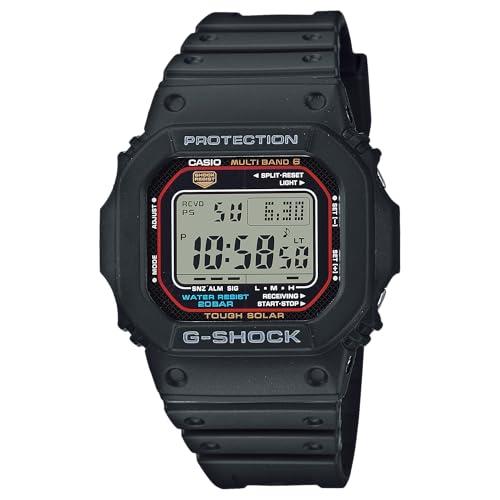
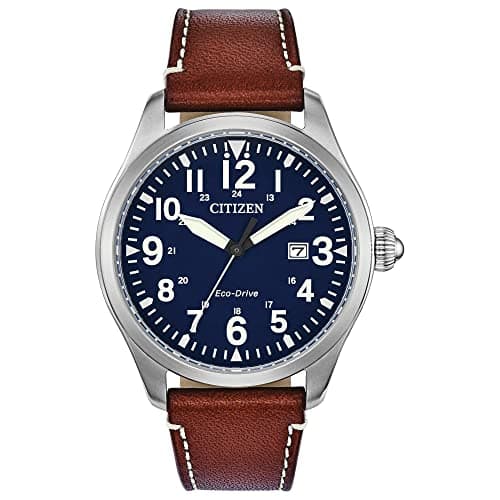
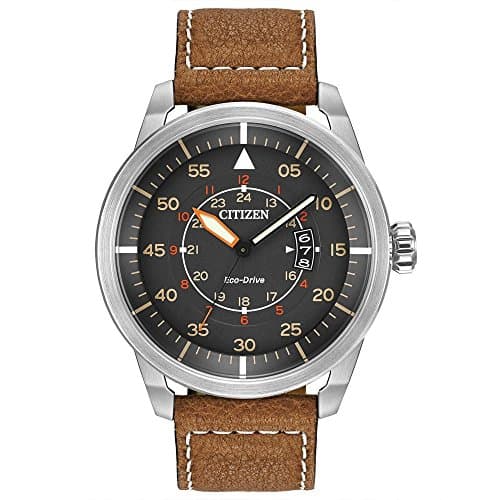
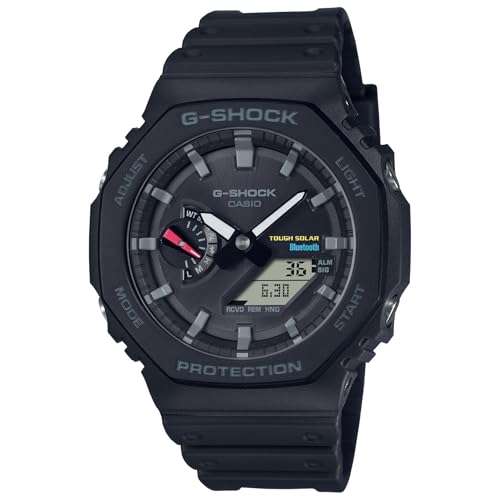
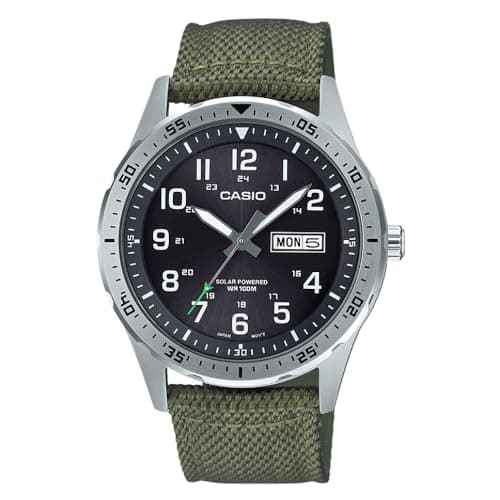
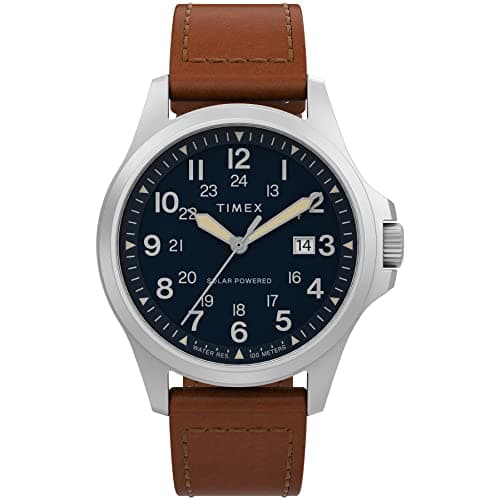
This hub's price ladder used to start at $200 and climb. Its solar roundup spans roughly $110 to $400 and has to give most of its slots to the dearer Citizens, so the question "what is the best solar watch I can actually buy for under two hundred dollars" went unanswered. This page answers it, and the answer is better than it was five years ago: at this ceiling you can now have sapphire, or 200m, or a watch that sets itself from a radio signal. You cannot have all three.
The criteria, in the order they decide the ranking. First, crystal, because it is the one specification that is normally the first thing cut at this price and the one you look through every day — one watch here has sapphire and five have mineral. Second, water resistance and whether the crown screws down. Third, what you have to do to keep the time right: two of these set themselves, four do not. Fourth, whether it takes a standard strap, which on this site is never a footnote — three do, three do not. Fifth, price, which across this page spans less than twofold.
A word on what "solar" actually buys you, because it is not sunlight. Both Citizen's Eco-Drive and Casio's Tough Solar run on a photovoltaic cell behind the dial charging a secondary cell, and both publish a run time in total darkness — Citizen publishes a power-save mode on Eco-Drive, and Casio publishes roughly ten months from a full charge on the GW-M5610U with no further light. Office light is enough to keep either topped up. What you are buying is not free energy; it is a case that never has to be opened, which is also why a solar watch tends to keep its water-resistance rating honest for longer than a battery watch does. Our Eco-Drive explainer covers the mechanism.
The $200 ceiling, and what it is measured against
Every pick on this page sat under $200 on the live price feed when this page was built, and the figure under the table is the date that feed was generated. We do not hardcode prices into copy anywhere on this site, so if a listing moves above the ceiling the number in the table moves with it — and if the feed goes stale, the price disappears rather than going stale with it. That is deliberate: a band page whose prices cannot be checked is just an assertion.
1. Crystal: the single biggest difference on this page
Timex publishes a sapphire crystal on the Expedition North Field Post Solar. Nothing else here has one. Every other pick is mineral glass, which is harder than acrylic and much easier to scratch than sapphire. At $200 that is normally the trade a buyer does not get to make, and it is the whole reason the Timex is ranked first rather than the cheaper G-Shock. If you want the comparison in detail, read sapphire against mineral crystal; if sapphire is non-negotiable at any price, the sapphire roundup is the page.
2. Water resistance and the crown
Two picks publish 200m: the GW-M5610U and the GA-B2100, both G-Shocks with no crown to seal. Four publish 100m: the Timex, both Citizens and the Casio MTP-S120L. The Timex is the only watch on this page for which the maker publishes a screw-down crown and screw-down caseback at 100m, which is the mechanical reason we rate its rating more highly than the Citizens' identical number. None of these six carries an ISO 6425 diver's certification; for that you have to go up a bracket to a Citizen Promaster, which is the first pick on the parent solar roundup.
3. Do you ever have to set it?
Two of these set themselves. Casio publishes Multi-Band 6 reception on the GW-M5610U, with automatic reception up to six times a day, and Bluetooth phone sync on the GA-B2100 along with a world-time database of roughly 300 cities. The Timex, both Citizens and the MTP-S120L are set by hand. Combine that with the solar cell and the two G-Shocks are the only watches here that genuinely need nothing from you, ever — which is a real argument for buying one even if you prefer an analog dial.
4. Lug width: the thing three of these do not have
The Timex takes a standard 20mm strap. The Citizen Garrison and the Casio MTP-S120L take 22mm. The Citizen Avion takes 20mm. The two G-Shocks take nothing — both use a proprietary resin band bolted into the case, and Casio publishes a band size range rather than a lug measurement. On a site built around lug width that is a material fact, not a footnote: if the appeal of a watch for you includes the strap drawer you already own, the two G-Shocks drop off your list and the Timex is the pick.
Where this page sits against the hub's other brackets
Three of these six are not on the parent solar roundup at all, because that page ranks Citizen's dearer Eco-Drives and has no room for Casio's solar line. Against the hub's general under-$200 page this one shares a single pick, because that page is about tool watches of any power source and this one is only about light-powered ones. And if the uptime argument is what brought you here rather than the price, read the best tactical watches, which ranks on sealing and legibility and lets the price go where it needs to.
What a solar watch under $200 does not get you
Three honest limits. There is no mechanical movement here and there cannot be — solar means quartz, and if you want a watch that runs without a battery and without electronics, the page is watches without batteries, where the automatics live. There is no titanium at this ceiling. And the secondary cell in a solar watch is not immortal: makers generally describe it as long-life rather than permanent, so treat "never needs a battery" as "does not need one on any normal ownership horizon", which is what the makers themselves publish.