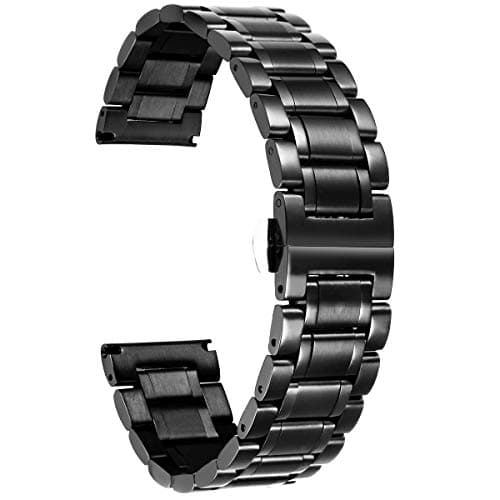
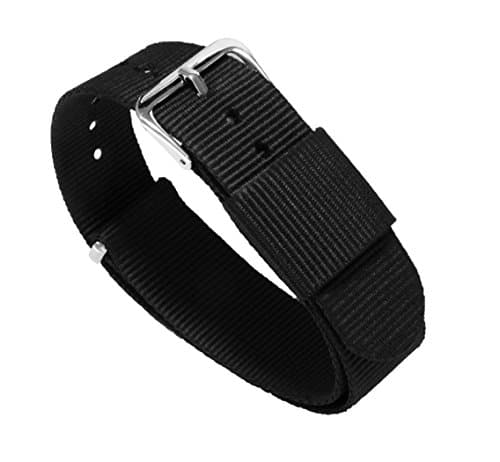
24mm is the width at which the strap market stops being generous. 18, 20 and 22mm are the sizes every maker produces in every material and colour; 24mm is where a surprising number of listings simply stop, and where the straps that do exist often read as a scaled-up version of a design drawn for something narrower. There are fewer good choices here, which is exactly why the page is worth having.
The watches that take it are the big ones: 44mm-and-up dive cases, oversized pilot and tool watches, and a handful of fashion-sized pieces. Almost nothing on this site is 24mm — the divers here are 22mm and the field watches 20mm — so the honest first question is whether your watch takes the width at all. Measure the gap between the lugs before ordering, because at this end of the range the usual rule of thumb (lug width is roughly half the case diameter) starts to break down: plenty of 44mm watches are 22mm, not 24mm.
How this page is ranked
Three things, in order. Whether 24mm is a real size in the listing rather than a width the brand nominally offers — every strap below is sold in 24mm through the maker's own variation listing. Whether the strap tapers, because a 24mm band that stays 24mm all the way to the buckle wears like a cuff, and taper matters more at this width than at any other. And what it is made of, because the six picks here are deliberately one per material rather than six nylons.
A note on the steel entry. The BINLUN bracelet is here because it is the only solid-link bracelet on this site whose listing runs to 24mm — the premium bracelets in our bracelet roundup stop at 22mm, and the five-row MiLTAT quick-release line stops at 20mm. At 24mm your bracelet options narrow to the budget end, and the page says so rather than pretending otherwise.
Taper is the specification that matters at 24mm
A strap that measures 24mm at the lugs and 24mm at the buckle is a wide, flat band that wraps the wrist with no shaping at all. At 18mm nobody notices. At 24mm it is the difference between a watch that sits and a watch that sits on top of you — the extra width runs down the sides of the wrist, where it has nowhere to go.
StrapHabit publishes the figure for its tropic: on the 22mm size the strap tapers to a 20mm buckle, with 316L hardware and a stated 3 to 5mm thickness. Barton publishes a 2mm taper on its sailcloth line. Most 24mm listings publish nothing at all, and at this width the absence is worth noticing. Where a maker states the number, the product card below quotes it; where it does not, the card says so.
The widths that are not 24mm but look like it
Two traps. The first is odd widths: 23mm exists, Barton makes its canvas and sailcloth straps in it, and a 24mm strap will not go into 23mm lugs. The Ritche leather here covers 19, 21 and 23mm as well as the even sizes, which is the cheapest rescue for a watch in an awkward size.
The second is watches that take no standard strap at all. A G-Shock with a proprietary resin band, a watch with an integrated bracelet, a case with fixed lug bars — none of these take a 24mm strap, however wide the lugs look. The lug width chart lists which watches on this site are which.
Material, at this width specifically
Nylon is the safest 24mm purchase. A NATO is already a flat band, so the absence of taper costs nothing, and the single-pass construction gets more valuable as the watch gets heavier — a 45mm diver is exactly the watch you do not want to drop when a spring bar lets go.
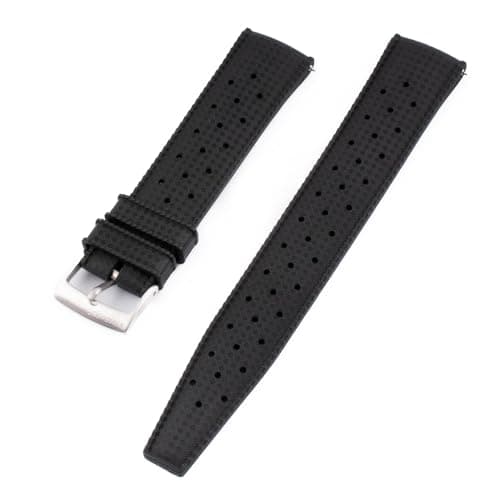
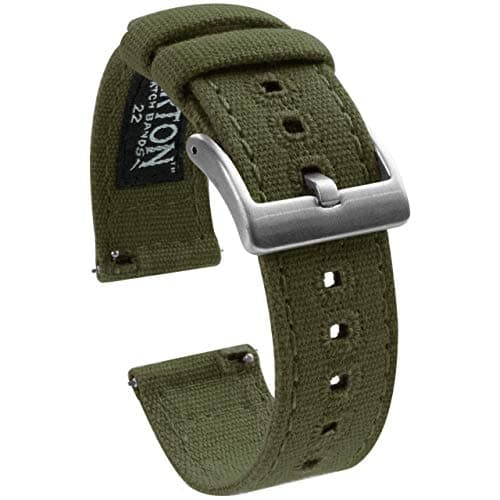
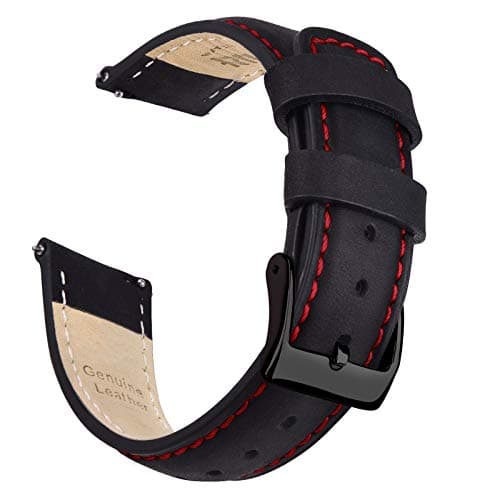
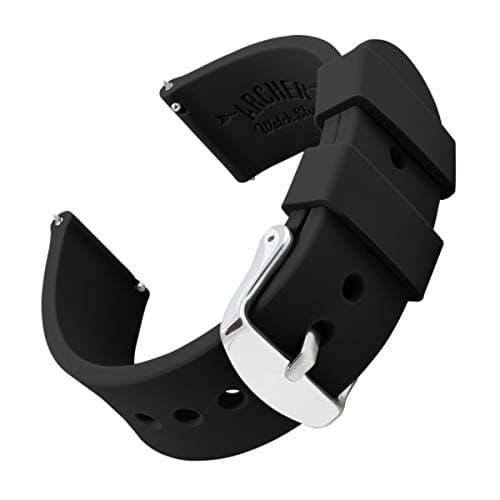
FKM rubber is the right answer for anything that gets wet, and the StrapHabit is the best-documented tropic on Amazon: genuine FKM, quick release, 316L hardware, dimensions published. Canvas suits a big field or tool watch and is machine washable, but it holds moisture and is not a swimming strap. Leather at 24mm is the hardest to get right — a wide, thick leather band is a great deal of material, and the Ritche is thin, which is a disadvantage at every other width and an advantage at this one. Silicone is the comfort pick, and the Archer is the softest compound we rank. Steel adds real weight to a watch that is already heavy; at 24mm, decide deliberately whether you want that.
Should you be buying 24mm at all?
Worth asking honestly. A 24mm lug width signals a large watch, and the direction the market has moved — and the direction this site's own size guidance points — is smaller. If you are buying a 24mm strap because you own a 45mm watch and love it, this page is for you. If you are shopping for the watch and the strap at the same time, the 22mm market is far larger, costs less, and includes every bracelet and premium strap on this site.