A field watch and a dress watch are both plain three-hand watches with no bezel, which is why people confuse them, and they are built to opposite briefs. A field watch is designed to be read instantly in bad light by someone with other things to worry about. A dress watch is designed to be as thin and quiet as possible so it slides under a shirt cuff and does not announce itself.
That single difference drives everything else — dial contrast, hand size, lume, case thickness, water resistance, crystal shape and which straps suit. Below we set out what actually separates them, then rank two strong examples of each so you can see the divergence in the spec table rather than in the abstract.
The short version: if this is your first watch or your only watch, buy the field watch. It does everything the dress watch does at a distance and it survives a life the dress watch does not. Buy the dress watch second, when you have a specific occasion for it — and when you do, our best affordable dress watches roundup is the shortlist, ranked on thickness rather than diameter.
Legibility is the whole argument
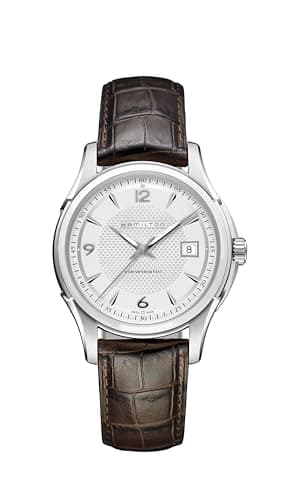
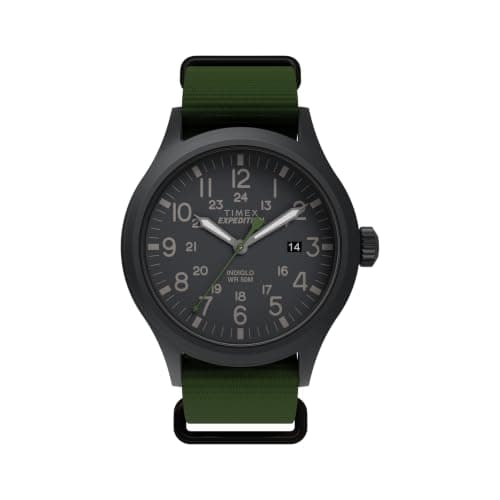
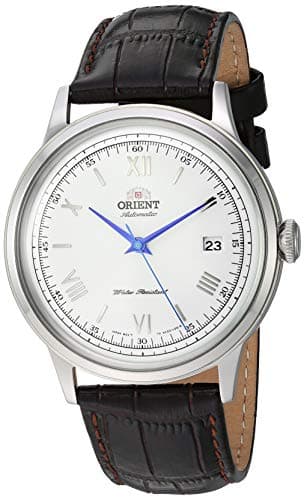
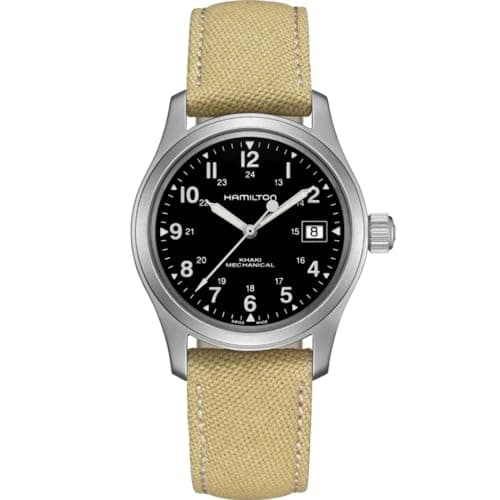
A field watch uses maximum contrast: a matte black or khaki dial, large printed Arabic numerals, broad hands and lume on everything that moves. Many carry an inner 13-24 hour ring, a leftover from military issue. A dress watch does the opposite — applied slim indices or Roman numerals, fine hands, a glossy or sunburst dial and often no lume at all. One is designed for a glance in the dark; the other is designed to look considered under restaurant lighting.
Thickness matters more than diameter
The single most dress-watch quality is thinness. A dress watch wants to be under about 11mm so it clears a cuff without catching, which is why they use thin hand-wound or slim automatic movements and flat or domed crystals. Field watches are allowed to be thicker because a sleeve is not the constraint. In practice the diameters overlap heavily — the Hamilton Khaki Field Mechanical is 38mm and the Orient Bambino is 40.5mm — so the case height and the dial treatment are what actually tell them apart.
Water resistance splits them cleanly
Field watches are usually rated 50m to 100m; dress watches are usually 30m. That is not an accident of cost, it is a design consequence — the thin case, slim crown and display or snap casebacks that make a dress watch elegant are also what limit the seal. A 30m rating means splashes and rain, not swimming. If you want one watch and it will sometimes be in water, that alone decides the question.
Lug width and strap options
Field watches use standard even widths — 20mm and 22mm dominate — which opens the entire aftermarket and suits nylon, canvas and NATO straps that cost under twenty dollars. Dress watches sometimes use odd widths: the Orient Bambino takes 21mm, which narrows the choice considerably and is worth knowing before you buy. Our lug width chart lists the figure for dozens of models.
Which one to buy first
The field watch, almost always. It reads correctly with a suit at any distance a stranger will ever look at it, and it also survives a hike, a beach and a toddler. The reverse is not true: a dress watch on a canvas strap in the rain looks and feels wrong, and the 30m rating means it genuinely is. Buy the field watch as the default and add the dress watch when you have an actual reason.
Where the categories overlap honestly
There is a middle ground and it is worth naming: a 38-40mm three-hander with a clean dial, a sapphire crystal, 100m water resistance and a leather strap covers both jobs credibly. The Hamilton Jazzmaster here is the closest thing on this page to that watch from the dress side, and the Hamilton Khaki Field Mechanical is the closest from the field side. If you want one watch and one only, pick whichever of those two dials you prefer looking at.